

Filters
Shopping Options
Primer Paint
Primer paint helps prepare suitable surfaces so following coats can bond more consistently and achieve a more reliable finish. Choose the correct primer for the substrate, whether you are working with wood, metal or a combination of compatible surfaces. Matching the primer to the surface and finishing paint helps create a stronger, more consistent paint system.
Choosing the Right Primer Paint for the Surface and Paint System
Primer paint prepares the substrate so the following coats have a sound, consistent surface to bond to. When choosing a paint primer, start with the material being painted, as bare timber, ferrous metal and previously coated surfaces can require different preparation systems. A wood primer should be selected for suitable timber, while a metal primer must match the type and condition of the metal being treated. We also recommend checking compatibility with the chosen finishing paint so the complete primer and topcoat system works together correctly.
Water-Based Primer vs Solvent-Based Primer: Which Suits the Job?
The choice between a water based primer and a solvent-based formulation affects drying, application and the surfaces for which the product is designed.
Water-Based Primer
- Quicker turnaround – Often allows subsequent decorating stages to begin sooner.
- Easy tool cleaning – Suitable products can usually be cleaned from brushes and rollers with water.
- Versatile applications – Modern formulations are available for wood, metal and other suitable substrates.
- System compatibility – Check that the following coat is compatible with the selected primer.
Solvent-Based Primer
- Specialist applications – Commonly used where a particular substrate or paint system requires it.
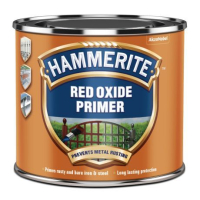
- Metal preparation – Products such as red oxide metal primer paint are designed specifically for suitable ferrous metals.
- Longer drying periods – Allow the full stated recoat time before continuing.
- Correct thinner required – Cleaning or thinning, where permitted, requires the product specified for that primer.
If the chosen paint system requires a separate intermediate coat after priming, continue with the appropriate Undercoat Paint before applying the final finish. Undercoat Paint
Multi-Surface Primer vs Dedicated Primer: When Should You Use Each?
A multi surface primer is useful when a project contains several compatible substrates, while dedicated primers are formulated around more specific surface requirements.
Multi-Surface Primer
- Broader compatibility – Suitable products can prime several different surface types.
- Useful on mixed projects – Reduces the need to change products between compatible materials.
- Check the specification – Multi-surface does not mean suitable for every possible substrate.
Dedicated Primer
- Surface-specific performance – Designed around the requirements of a particular material.
- Wood preparation – A wood primer paint can prepare suitable bare timber before subsequent coats.
- Metal preparation – Specialist metal primers can provide the correct base for specific ferrous or non-ferrous surfaces.
For timber projects, the primer should form part of a compatible system with the chosen Wood Paint, rather than being selected independently from the finishing product. Where a substrate has particular adhesion, corrosion or sealing requirements, we recommend using the primer specifically approved for that material rather than choosing solely for convenience.
Preparing Bare, New & Previously Painted Surfaces for Primer
Correct preparation determines how effectively the primer can bond to the substrate.
Bare & New Surfaces
Remove dust, grease and contamination before priming, and make sure the substrate is sound and dry. Bare timber should be prepared smoothly, while metal may require rust, scale or surface contamination to be removed before the appropriate wood primer or metal primer is applied.
Previously Painted Surfaces
Remove loose, flaking or poorly bonded coatings before continuing. Sound existing paint should be cleaned and prepared as required by the new paint system, and primer should only be used where the substrate, repaired areas or finishing product requires one. Repair damaged sections before painting rather than relying on primer to conceal unstable coatings.
Difficult Surfaces
Glossy, stained or unusual substrates may require a specialist or high-adhesion primer. Always check the stated surface suitability instead of assuming a standard primer will provide reliable adhesion. Scrapers, brushes and other Decorating Tools can also help with removing loose coatings and preparing the surface before priming. Decorating Tools
Drying, Sanding & Recoating Primer: When Is It Ready for the Next Coat?
Drying and recoat times can vary considerably between primer types, so use the stated recoat time rather than judging readiness only by whether the surface feels dry. Some fast-drying water-based primers allow the next stage within a relatively short period, while specialist wood or metal systems can require longer before another coat is applied.
The number of coats also depends on the specific primer and substrate. Some systems require a single coat, while bare, porous or more demanding surfaces may require additional treatment, so we recommend following the stated coat requirement rather than applying extra primer automatically.
Once the primer has reached its stated recoat stage, lightly sand where the paint system requires it to remove raised fibres or minor imperfections and create a smoother base. Remove all sanding dust before continuing, then apply the specified undercoat or finishing paint. For prepared metalwork, choose a compatible finish from the Metal Paint range according to the substrate and intended use.
Why Choose White Primer Before a White or Light Topcoat?
A white base can make sense when the final colour will also be white or another light shade, helping you start from a more neutral background before the finishing coats go on. This can be particularly useful where the existing surface is darker, patchy or made up of several repaired areas, although the primer still needs to be chosen for the surface first rather than by colour alone.
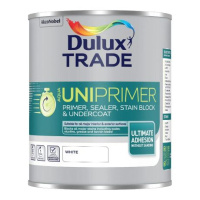
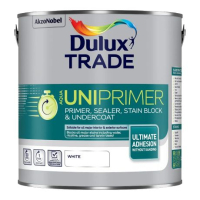
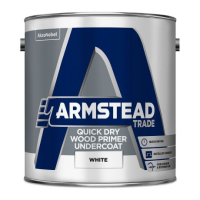
Whether you are looking for primer paint for walls or metal primer paint, white should be treated as the finish of the primer rather than the reason for choosing it. Once you have confirmed the correct product for the job, dulux trade aqua uniprimer white 2.5l and armstead trade quick dry wood primer undercoat white 2.5L provide white primer paint options for different paint systems.
Brush, Roller or Spray: Which Way Should You Apply Primer?
The best application method depends mainly on the size and shape of the area you are working on. A brush gives you more control around edges, corners and detailed sections, while a roller can make larger flat surfaces quicker and easier to cover evenly.
Spray application can be useful for broad areas or awkward shapes where getting an even coat with a brush would take longer. If you are searching for primer spray paint, check whether the product is supplied as an aerosol or whether it is a liquid primer approved for use with spray equipment, because the preparation and application method can differ. Always follow the stated application method for the primer you choose rather than assuming every primer can be brushed, rolled or sprayed.
FAQs
Can you use emulsion as a primer?
Emulsion paint should not normally be used as a substitute for a purpose-made primer. Where a surface requires priming, use a product designed for that substrate, such as an appropriate wood, metal or multi-surface primer, so the following paint can adhere correctly. Some wall-paint systems use a diluted first coat on new porous surfaces, but this should only be done when the chosen paint specifically allows it.
Do I need to prime MDF before painting?
Bare MDF should normally be primed before applying the finishing paint because its surface and particularly its cut edges can absorb paint unevenly. Use a primer specifically suitable for MDF, making sure edges and machined areas receive adequate preparation before the next coat. Multi-surface products within our range, such as Dulux Trade Aqua UniPrimer, are specifically approved for use on MDF.
Does masonry paint need a primer?
Masonry paint does not always require a separate primer, as the correct preparation depends on the condition of the surface and the specific paint being applied. Sound previously painted masonry may only require cleaning and suitable preparation, while bare, highly porous, powdery or problem surfaces can require an appropriate primer, sealer or stabilising treatment. Always follow the preparation requirements for the selected masonry paint rather than automatically applying a general-purpose primer.
Does direct to metal paint need primer?
A genuine direct to metal or direct to rust paint may not require a separate primer when it is being applied to a surface specifically approved by that product. For example, Hammerite Direct to Rust products stocked within our wider metal paint range are designed to act as primer, undercoat and topcoat on suitable ferrous metal. Zinc, aluminium, galvanised and other non-ferrous metals can have different preparation requirements, so check whether a specialist metal primer is required before application.
Can you use primer as paint?
Primer should not normally be left as the final decorative coat unless the product specifically states that it can also be used as a topcoat. Its primary role is to prepare the surface for the following paint system, while the finishing coat provides the required colour, appearance and final surface performance. Even combined primer-and-undercoat products in this category should therefore be finished with a compatible topcoat unless their instructions explicitly state otherwise.