

Filters
Shopping Options
Acoustic Plasterboard
Acoustic plasterboard helps reduce sound transfer through internal walls, partitions and ceilings when installed as part of a complete system. Its higher mass can improve privacy and control everyday noise, especially when combined with suitable insulation, sealed gaps and correctly treated joints. Available in different thicknesses, it should be selected according to the required performance, supporting structure and installation method.
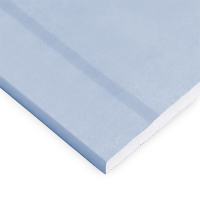 12.5mm Acoustic Plasterboard Tapered Edge 2400mm x 1200mm (8' x 4')-£2.76£14.39 £11.99 £17.15
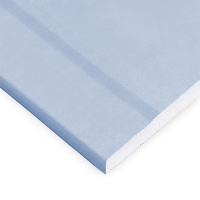 15mm Acoustic Plasterboard Tapered Edge 2400mm x 1200mm (8' x 4')-£7.15£16.79 £13.99 £23.94

What Is Acoustic Plasterboard?
Acoustic plasterboard is a high-density gypsum board designed to improve sound resistance when installed as part of a correctly specified wall, partition or ceiling system. It is often described as soundproof plasterboard, although no single board can make a room completely soundproof by itself. Its added mass helps reduce sound transmission more effectively than standard plasterboard while providing a surface ready for jointing, finishing and decoration.
Choosing Acoustic Plasterboard for Walls, Ceilings and Partitions
Choose soundproofing plasterboard according to the source of the noise, the construction being upgraded and the performance required from the complete system. The supporting frame, insulation, board layers, joints, fixings and service openings all influence the finished result.
Common applications include:
- Partition walls – Helps reduce sound transfer between bedrooms, offices, meeting rooms and adjoining living spaces.
- Wall linings – Can improve sound resistance when lining suitable masonry, timber-framed or metal-framed walls.
- Adjoining rooms – Useful where additional privacy is required between rooms or neighbouring properties.
- Ceilings – Acoustic plasterboard for ceilings can help limit sound passing between floors within a suitable ceiling build-up.
- Home offices – Helps reduce speech, television and general household noise entering or leaving the workspace.
- Renovation projects – Can upgrade an existing lining where the supporting construction allows for additional board weight and thickness.
Acoustic plasterboard is suitable for partitions, wall linings and ceilings where enhanced sound resistance is required. It is not intended for high-humidity areas, where a suitable moisture-resistant board should be considered instead.
Choosing Between 12.5mm and 15mm Acoustic Plasterboard
The correct thickness depends on the required acoustic performance, installation area and complete system design. Both thicknesses can be used for suitable walls and ceilings, but they differ in weight, rigidity and the contribution they make to the overall build-up.
- 12.5mm acoustic plasterboard – A lighter option suitable for partitions, wall linings and ceiling systems designed around a 12.5mm sound-resistant board. It can also be practical where several layers are specified and handling weight is an important consideration.
- 15mm acoustic plasterboard – A heavier and more substantial board that adds greater mass to the construction. It also provides increased impact and fire resistance compared with the 12.5mm version.
A 15mm board may make a stronger contribution to an acoustic system, but it should not automatically replace a 12.5mm board within an existing specification. Check the required layers, framing capacity, fixing lengths and overall wall or ceiling depth before ordering.
How Acoustic Plasterboard Helps Reduce Noise
Noise reducing plasterboard works mainly by adding mass to the wall or ceiling. A heavier lining is harder for sound energy to move, helping reduce airborne noise passing through the construction.
The strongest results normally come from combining several acoustic measures:
- Added board mass – Denser linings provide greater resistance to sound movement.
- Multiple layers – Additional layers can increase mass and improve sound resistance within a suitable system.
- Cavity insulation – Acoustic insulation between studs or joists helps absorb sound within the void.
- Separated framing – Resilient bars or independent frames can reduce the direct path for vibration.
- Sealed gaps – Acoustic sealant around edges and service openings helps limit sound leakage.
- Staggered joints – Offset joints between board layers reduce continuous weak points through the lining.
Acoustic performance should be assessed across the complete wall or ceiling rather than judged by the board alone. Changing the board layers, frame design, cavity insulation or sealing details can alter the finished level of sound reduction.
Why Tapered Edge Boards Help with Jointing and Sound Control
Tapered edge acoustic plasterboard has recessed long edges that provide space for joint tape and compound. This allows the finished joint to sit closer to the board face, helping create a flatter surface before priming and decoration.
Correct joint treatment also matters for sound control because untreated gaps can create paths for noise to pass through. Boards should be closely fitted, supported at the edges and finished using compatible tape, jointing compound and perimeter sealant where required.
When several layers are installed, the joints should be staggered so they do not align through the full construction. The exposed outer layer can then be jointed and decorated, while the concealed layers add mass and maintain continuity across the system.
Acoustic Plasterboard vs Standard Plasterboard
Use standard plasterboard for general internal walls, partitions and ceilings where no acoustic upgrade is specified. It is lighter, usually cheaper and suitable for most routine drylining work.
Choose acoustic plasterboard where additional control of airborne noise, such as speech, television or music, is required. Its higher density and mass make it better suited to partitions between bedrooms, living areas, home offices and adjoining spaces. Allow for the additional board weight when handling and selecting the frame and fixings.
For footsteps, vibration or a specified acoustic rating, changing the board alone is unlikely to be enough. Check the complete system, including the frame, insulation, board layers, service openings and perimeter sealing, and follow the manufacturer’s tested specification.
FAQs
How good is acoustic plasterboard?
Acoustic plasterboard is a useful upgrade where ordinary internal linings do not provide enough sound control. Its higher density can improve performance, especially in rooms affected by speech, television or everyday household noise. The final result still depends on correct installation and the condition of the surrounding structure.
How do you install acoustic plasterboard?
Fix the boards to a suitable timber or metal frame using the correct plasterboard screws and spacing for the system. Keep the boards tightly fitted, support all edges and seal gaps around the perimeter and service openings. Finish the joints with compatible tape and jointing compound before priming or decorating.
What colour is acoustic plasterboard?
Acoustic plasterboard is commonly identified by a blue face, although colours can vary between manufacturers. The colour helps distinguish it from standard, moisture-resistant and fire-rated boards on site. Always confirm the product type from the label and specification rather than relying on colour alone.
How effective is acoustic plasterboard?
Its effectiveness depends on the type of noise, the existing wall or ceiling and the quality of installation. It is generally better at reducing airborne sound when included in a well-sealed construction with suitable cavity materials. It is less effective where sound is travelling through floors, joists, pipes or other connected building elements.
How thick is acoustic plasterboard?
Acoustic plasterboard is commonly available in 12.5mm and 15mm thicknesses. The 15mm option is heavier and provides more mass, while the 12.5mm board can be easier to handle and layer. The required thickness should follow the planned wall or ceiling construction.
Does soundproof plasterboard work?
Yes, soundproof plasterboard can reduce noise transfer, but it will not block every sound completely. It works best when gaps, sockets, edges and adjoining surfaces are properly treated during installation. Poor sealing or sound travelling around the board can significantly reduce the benefit.