

Filters
Shopping Options
Plasterboard Tape
Shop plasterboard tape at MGN Builders Merchants for reinforcing joints on internal walls and ceilings. Choose from paper joint tape and self-adhesive scrim tape to suit your jointing compound or plaster finish and the requirements of your plasterboard system.
Choosing Plasterboard Joint Tape for Your Finish
Plasterboard tape reinforces joints between sheets on internal walls and ceilings. Choose the tape together with the jointing compound or finishing plaster, as the products need to work as a compatible system.
For a tape-and-joint finish, the joints are filled and feathered into the surrounding board surface before decoration. For a skim finish, plaster covers the full surface.
Paper Joint Tape for Flat Joints & Internal Corners
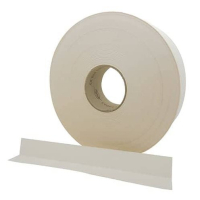
Paper joint tape is used with compatible jointing compounds to reinforce plasterboard seams and internal angles. Its centre crease allows it to fold along wall-to-wall and wall-to-ceiling junctions.
Bed the tape into a continuous layer of compound, then press it into place to remove trapped air while retaining enough compound underneath to bond it. Cover and finish according to the jointing system’s instructions.
Self-Adhesive Scrim Tape for Plasterboard Joints
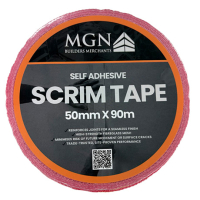
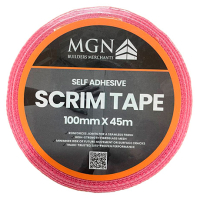
Self-adhesive scrim tape is a fibreglass mesh tape that sticks directly to a clean, dry board surface. Its adhesive backing holds it in position while the compatible plaster or compound is applied.
Plasterboard scrim tape is commonly used to reinforce flat joints before skimming. Centre the mesh over the joint and press it firmly into place without wrinkles.
If you are tape-and-jointing rather than skimming, check that the compound is approved for use with mesh tape. Self-adhesion makes positioning easier; it does not replace the finishing material needed to complete the joint.
Choosing Jointing Compound & Corner Reinforcement
For internal corners, creased paper tape provides a fold that follows the angle. External corners need the corner reinforcement specified for the finish, such as suitable plaster beads.
Choose a compatible plasterboard jointing compound for bedding and covering the tape. Check whether separate bedding and finishing products are required, and follow the stated setting or drying times between coats.
Preparing Joints & Reducing the Risk of Cracks
Before applying dry lining tape, check that the boards are securely fixed and repair damaged edges. Remove dust and loose material, and pre-fill gaps where the finishing system requires it.
Tape helps reinforce a properly prepared joint, but it cannot compensate for loose boards or ongoing movement. When repairing a recurring crack, address the cause before retaping.
For fire resistant or acoustic constructions, use the tape, compound and installation method specified for the complete plasterboard system.
FAQs
Can I fill plasterboard joints without tape?
Only omit tape where the specified jointing system allows it. Some no-tape jointing compounds permit tape-free flat joints under defined conditions, while internal corners may still require paper tape. Ordinary filler or jointing compound should not automatically be treated as a substitute for reinforcement tape. Follow the complete system specification for fire resistant or acoustic constructions.
Can you paint over plasterboard tape?
Do not paint directly onto exposed paper joint tape or scrim mesh. The tape must be embedded and covered with the compatible jointing compound or plaster finish. Allow the finished surface to dry, sand where required and remove dust. Apply the primer or preparation treatment specified for the finishing system before painting.
Can you tape and joint square-edge plasterboard?
Yes, where the board and finishing system allow it. Unlike tapered edges, square edges do not provide a recess for the tape and compound, so the joint treatment sits above the board surface. It needs to be feathered over a wider area to make the raised joint less noticeable. Tapered-edge boards generally make a flat tape-and-joint finish easier to achieve.
Do you need scrim tape over plasterboard screws?
Normally, individual screw heads are filled with suitable jointing compound rather than covered with scrim tape. The heads should be correctly seated without breaking the paper facing. If a screw has damaged the board or is not holding it securely, correct the fixing before filling; tape over the surface does not restore the fixing’s grip.
Can scrim tape be used to repair cracks?
Scrim tape can reinforce suitable minor surface repairs when used with a compatible compound or plaster. Remove loose material and check that the surrounding surface is sound, clean and dry before applying the repair system. If a crack keeps returning, investigate movement or loose boards first. Tape alone will not resolve an underlying movement problem.