

Filters
Shopping Options
Plastering Trowels & Hawks
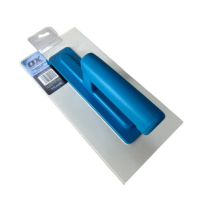
Shop plastering trowels and hawks at MGN Builders Merchants for applying and finishing plaster on walls and ceilings. Choose from stainless steel and plastic trowels, flexible finishing trowels, and aluminium or polyurethane plasterers’ hawks. Select the trowel size and blade flexibility to suit the area you’re working on and the stage of plastering.
Choosing a Plastering Trowel for the Job
When choosing plastering trowels, start with the space you’re working in and the amount of control you need. A longer blade covers more surface with each pass, but takes practice to keep the pressure even. If you’re tackling your first skimming job, choose a size you can handle comfortably.
- Small repairs and narrow areas: a small plastering trowel gives you room to work around reveals, edges and awkward sections.
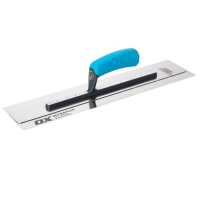
- General wall and ceiling work: a blade around 280mm long offers a practical balance between coverage and control.
- Larger, open surfaces: longer blades can help you cover larger areas efficiently once you’re comfortable with the angle and pressure.
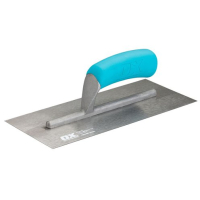
Check the blade width as well as its length. A compact tool such as the OX Pro Small Trowel 200mm x 75mm is useful alongside your main trowel for places where a wider blade won’t fit.
Matching Blade Flexibility to the Plastering Stage
Blade material and flexibility are separate things. A stainless steel plastering trowel can have a relatively firm or very flexible blade, so check both when comparing tools.
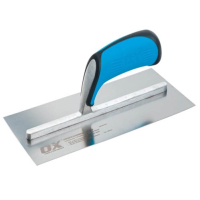
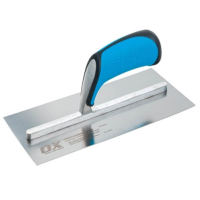
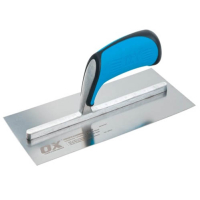
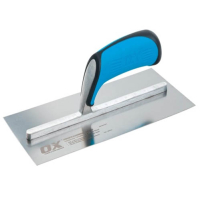
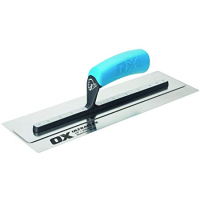
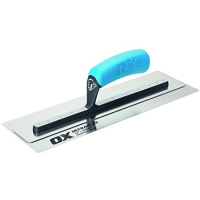
A firmer blade gives you more resistance when applying and spreading plaster. A flexible plastering trowel is useful for smoothing during the finishing stages, once the surface has started to firm up. The OX Pro UltraFlex finishing trowel is one option for this part of the job.
- Applying plaster: choose a blade that lets you spread the mix evenly and build up the required thickness.
- Finishing: a flexible blade with rounded corners can help reduce trowel lines.
- Specialist finishes: before choosing a plastic plastering trowel, check that it suits the material and finish you’re working with.
Timing matters as much as the tool. Follow the plaster manufacturer’s guidance, as working the surface too early or adding too much water can affect the finish.
Choosing a Comfortable Plastering Hawk
A plastering hawk holds plaster close to where you’re working, ready to transfer onto your trowel. When choosing one, think about the handle, board size and how it will feel when loaded. A comfortable grip makes a difference when you’re holding the hawk in one hand throughout the job.
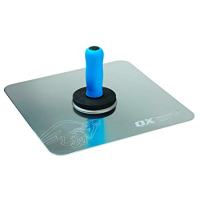
- Aluminium hawks: provide a rigid board, with textured surfaces on some models to help hold the plaster in place.
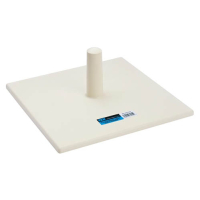
- Polyurethane hawks: offer a lightweight option if keeping tool weight down is a priority.
- Board size: look for enough room to load your trowel comfortably, while keeping the amount of plaster manageable.
The OX Pro aluminium plasterers’ hawk is one option for a rigid working surface. If you’re learning to use a hawk and trowel together, start with a small load and add more as you get used to the movement.
Putting Together a Practical Plastering Kit
The rest of your kit should suit the job. Skimming a whole wall, levelling a coat and finishing plasterboard joints each need different tools.
For levelling larger areas or working on small details, explore our plastering rules, floats and small tools. If you’re taping and jointing plasterboard, our drywall tools include knives and corner tools suited to that work.
Keep trowels and hawks clean as you work, and wash off plaster before it hardens. Check blade edges for damage and protect them during storage. Dried plaster or a nick in the edge can leave marks on the next surface you finish.
FAQs
What size plastering trowel is best for beginners?
A trowel around 280mm long is a practical starting point because it offers useful coverage without being too large to control. Choose one that feels comfortable in your hand and suits the space you’re working in. A smaller trowel is useful for narrow reveals and local repairs.
Do I need to break in a new plastering trowel?
Not every trowel needs breaking in: some have factory-prepared or pre-worn edges. Check the product specification before sanding or altering the blade, especially on thin, flexible finishing trowels. Follow the manufacturer’s guidance to avoid damaging the edge or changing the blade’s shape.
Can I use the same trowel for applying and finishing plaster?
Yes, a suitable general-purpose plastering trowel can be used for both applying and finishing plaster. A separate flexible finishing trowel is optional and can help with later smoothing passes. Check the intended use of the model you choose, as some blades are designed specifically for finishing.
When should I use a finishing trowel?
Use a finishing trowel during the smoothing stages as the plaster firms up, following the plaster manufacturer’s instructions. Avoid relying on a fixed waiting time, as the product, background suction and temperature affect how quickly the plaster sets. Keep any added water to the minimum recommended for that plaster.
Why does my plastering trowel leave lines?
Trowel lines can come from dried plaster on the blade, damaged edges, uneven pressure or an unsuitable blade angle. Clean and inspect the trowel, then check your technique and whether the plaster is ready for the next pass. A flexible blade can help with finishing, but it won’t correct every cause of marking.
How do you use a plasterers’ hawk?
Hold the hawk in your non-trowel hand, keeping the board broadly level with a small amount of plaster near the centre. Use the trowel to take manageable amounts from the hawk as you work. Start with a light load until you’re comfortable balancing the board and transferring the plaster.
How do I clean a plastering trowel?
Wash off fresh plaster with clean water and a suitable brush or sponge before it hardens, including around the handle and shank. Dry the tool after cleaning and store it where the blade is protected from knocks. For hardened deposits, follow the tool manufacturer’s cleaning advice rather than scraping aggressively across the working face.