

Filters
Shopping Options
Drywall Tools
Shop drywall tools at MGN Builders Merchants for preparing plasterboard edges and finishing joints and corners. Choose from taping and jointing knives, internal and external corner trowels, plasterboard rasps and hand sanders. Use narrower knives for filling and detail work, and wider taping knives for spreading and feathering jointing compound.
Drywall Tools for Preparing Plasterboard Edges
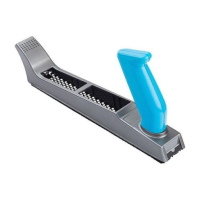
After cutting plasterboard, check how the piece fits before fixing it in place. Rough edges or a slightly oversized cut can make fitting awkward. A plasterboard rasp lets you remove small amounts of material and tidy the edge without making another full cut.
The 250mm OX plasterboard rasp is useful for these small adjustments, including refining the edges of cut-outs. Work gradually and check the fit regularly.
- Uneven edges: remove loose material and rough spots left after cutting.
- Tight-fitting pieces: trim a little at a time rather than forcing the board into position.
- Paper facing: keep it intact and follow the board manufacturer’s instructions for preparing cut edges.
Dry Lining Tools for Taping and Jointing
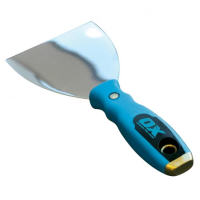
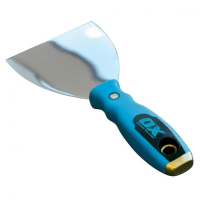
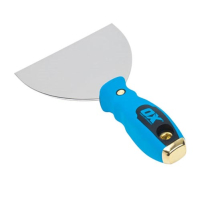
A narrow jointing knife gives you control over screw heads, small repairs and areas with limited access. A wider taping knife helps spread compound across the joint and feather its edges — thinning the compound towards the surrounding board so the transition is less noticeable.
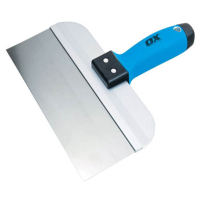
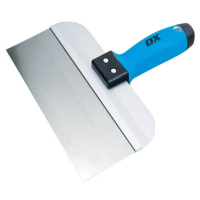
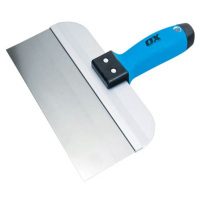
The 250mm OX Pro taping knife has a flexible stainless steel blade with an aluminium backing. It provides a mid-width option between the 200mm and 300mm knives in the range.
- 102–152mm jointing knives: choose these for filling and smaller details.
- 200–300mm taping knives: use wider blades to spread and smooth compound over a broader area.
- Clean blade edges: remove dried compound between uses to help prevent lines in the next coat.
Choosing a Corner Trowel
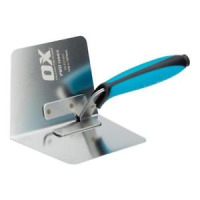
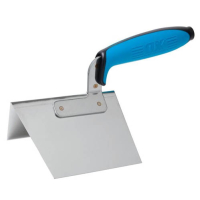
Match the trowel to the angle you are finishing. An internal corner trowel works into an inward-facing corner, such as where two walls meet. An external corner trowel fits around an outward-facing corner.
The OX internal corner trowel has a flexible stainless steel blade designed for 90° internal corners. Its angled shape helps smooth compound along both sides of the junction.
- Internal or external: choose the shape that matches the corner.
- Tape and beads: follow the specified jointing system; a corner trowel shapes the compound and does not replace reinforcement.
Hand Sanding Before Decoration
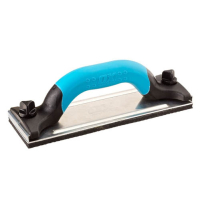
Once the jointing compound has dried, a drywall hand sander helps remove small ridges and high spots. The range includes a 240mm x 80mm hand sander for working over joints and filled areas.
Use light, controlled passes and check the surface as you go. Careful application with your knives should leave less material to sand away.
- Drying time: follow the compound instructions before starting.
- Abrasive grade: use the grade recommended for the jointing product.
- Surface condition: smooth the compound without exposing the tape or scuffing the plasterboard paper.
FAQs
What is a taping knife used for?
A taping knife spreads and smooths jointing compound over plasterboard joints and taped seams. Its wide blade helps thin out the edges of the compound so the joint blends into the surrounding board. Use the tape and compound recommended for your plasterboard system.
What size taping knife do I need?
Choose a width that suits the joint and gives you room to work. A 200mm knife is useful in smaller areas, while 250mm and 300mm blades help spread finishing coats over a wider strip. Keep a narrower jointing knife alongside it for screw heads and small repairs.
How do I use an internal corner trowel?
Fit the specified corner tape and apply jointing compound according to the system’s instructions. Draw the trowel along the corner with steady pressure to smooth both sides, removing excess compound as you go. Keep the blade clean to help avoid leaving ridges.
How do I use a plasterboard rasp?
Support the board securely, then use short, controlled passes to tidy the cut edge or remove small amounts of material. Check the fit regularly so you do not trim away too much. Take care to keep the paper facing intact.
How do I attach sandpaper to a manual hand sander?
If your sander uses clamps, release them and place a correctly sized abrasive sheet over the sanding pad. Secure one end, pull the sheet flat and fasten the other end so it sits firmly without wrinkles. Check the sander’s instructions for the required sheet size.
How should I clean drywall tools after use?
Remove jointing compound before it hardens, following the compound manufacturer’s cleaning instructions. Clean the blade edges carefully and dry the tools before putting them away. Leftover setting compound can make the next batch harden faster, so start each mix with clean equipment.