

Filters
Shopping Options
Plastering Rules, Floats & Small Tools
Shop plastering rules, floats and small tools at MGN Builders Merchants for levelling, smoothing and detailed finishing work. Choose from semi-flexible plastering rules, stainless steel finishing rules, polyurethane and sponge floats, plasterers’ small tools and render scrapers. Match the rule length, float type or small tool size to the material, working area and finish required.
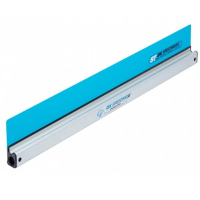 OX Pro Speedskim ST Plastering Rule Semi Flexible 600mm-£8.33From £58.26 £48.55 From £66.59
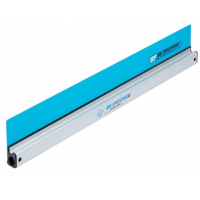 OX Pro Speedskim ST Plastering Rule Semi Flexible 900mm-£11.35From £63.91 £53.26 From £75.26
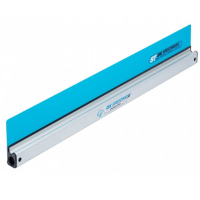 OX Pro Speedskim ST Plastering Rule Semi Flexible 1200mm-£10.67From £74.69 £62.24 From £85.36
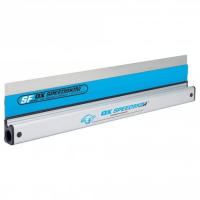 OX Pro Speedskim SF Finishing Rule Stainless Steel 600mm-£8.94From £62.63 £52.19 From £71.57
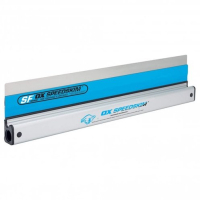 OX Pro Speedskim SF Finishing Rule Stainless Steel 900mm-£11.68From £81.67 £68.06 From £93.35
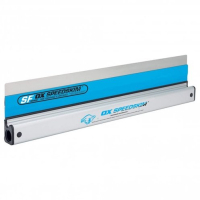 OX Pro Speedskim SF Finishing Rule Stainless Steel 1200mm-£13.13From £91.90 £76.58 From £105.02
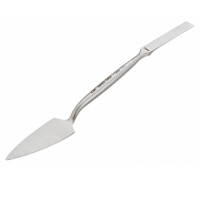
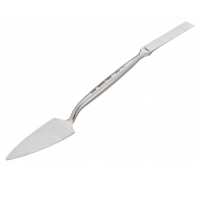
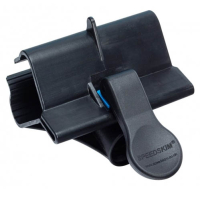 OX Pro Speedskim Universal Pole Attachment-£3.97From £27.72 £23.10 From £31.69


Choosing a Plastering Rule: Speedskim ST or SF
Match your plastering rule to the stage of the job. The OX Speedskim range includes semi-flexible ST rules for levelling and flattening freshly applied material, alongside SF finishing rules with stainless steel blades for fine finishing.
The 600mm OX Speedskim ST plastering rule is the shortest ST option in this category. The range also includes 900mm and 1200mm lengths for working across wider areas.
- Speedskim ST: a semi-flexible plastic blade for ruling off, flattening and finishing compatible plaster and render.
- Speedskim SF: a fine stainless steel blade for finishing gypsum plaster and jointing compounds.
- Rule length: choose a length you can control comfortably within the available working space.
Polyurethane and Sponge Floats for Surface Finishing
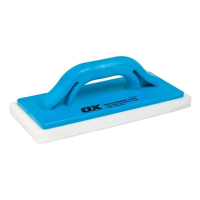
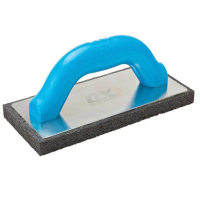
Choose a plastering float according to the material and the finish you need. A polyurethane float has a firm working face, while a sponge float works the surface differently and should be used where the plaster or render manufacturer recommends that finishing method.
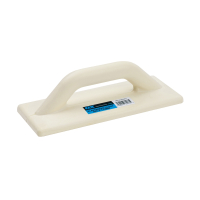
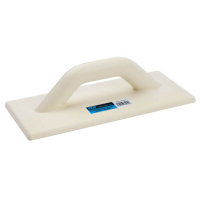
The 280mm OX polyurethane float has a lightweight body and a non-absorbent patterned face. A larger 350mm x 150mm version is also available.
- Polyurethane floats: use the firm face to work and even out suitable fresh material.
- Sponge floats: match the sponge type and texture to the required surface finish.
- Float size: smaller faces are easier to work around details; larger faces cover more surface with each pass.
Plasterers’ Small Tools for Detail Work
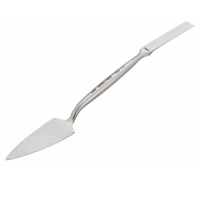
A plasterer’s small tool helps place and shape small amounts of material where a full-size trowel is awkward to use. It is useful around narrow gaps, edges and local repairs that need closer control.
The 16mm OX plasterers’ small tool has a one-piece carbon steel construction. It sits between the 13mm and 19mm options in the range.
- 13mm: a narrower option for confined details.
- 16mm: an intermediate size for small filling and finishing tasks.
- 19mm: a wider option where there is more room to work.
Choose by the space you need to reach and the amount of material you want to apply.
Render Scrapers for Keying and Surface Preparation
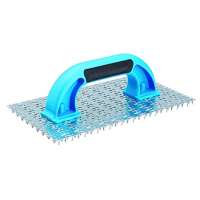
A render scraper has a spiked working face for scraping render and creating a key — a rough surface that helps the next coat bond. The OX Trade Render Scraper has a 250mm x 130mm galvanised metal spiked base and a two-component handle.
Check the render manufacturer’s instructions before starting, as the material needs to be at the right stage for scraping or keying.
- Keying: create the surface texture required before a subsequent coat.
- Scraping: work the surface where the render system calls for a scraped treatment.
- Timing: follow the recommended stage of application and preparation before continuing with the next coat or finish.
FAQs
Should I choose Speedskim ST or SF?
ST is designed for levelling, flattening and finishing suitable plaster and render. SF has a fine stainless steel blade for smoothing gypsum plaster and jointing compounds during the finishing stages. Choose according to the material you are using and the job you need to do.
What size Speedskim should I get?
A 600mm rule is easier to handle in smaller spaces and around openings. The 900mm and 1200mm versions cover more surface with each pass on open walls and ceilings. Choose a length that gives you room to work and feels comfortable to control.
When should I use a sponge float on plaster?
If the plaster manufacturer recommends sponge floating, wait until the plaster is firm enough to work without pulling it away from the surface. The timing depends on the plaster, how quickly the background absorbs moisture and the conditions on site. Follow the product instructions rather than a fixed waiting time.
How do I use a sponge float on plaster?
Where sponge floating is recommended, use a clean float and work gently over the surface. Follow the plaster manufacturer’s instructions on dampening the sponge and whether the surface needs trowelling afterwards. Stop if the sponge starts dragging the plaster or leaving damage.
What is a plasterer’s small tool used for?
A plasterer’s small tool helps you apply and shape small amounts of material around narrow gaps, edges and detailed repairs. Its slim blade reaches areas where a full-size trowel would be awkward to use. Choose from 13mm, 16mm and 19mm sizes to suit the space you are working in.
When should I use a render scraper?
Use a render scraper where the render system calls for a rough key or a scraped finish. For a scraped finish, the render should be ready to scrape cleanly without clogging the tool. Follow the manufacturer’s instructions on when to start, as the product and weather affect the timing.