

Filters
Shopping Options
Plasterboard Jointing Compound
Plasterboard jointing compound, also known as joint filler or joint compound, fills and finishes the joints between plasterboard sheets so walls and ceilings are ready to decorate. Our range covers setting and ready-mixed compounds for trade and DIY drylining. Check drying times and application details on each product page before ordering.
What Is Plasterboard Jointing Compound Used For?
Jointing compound is used to tape and joint plasterboard. It beds the joint tape, fills the joints and screw heads, and builds up smooth finishing coats that blend into the board face. It is also used for small repairs to plasterboard walls and ceilings. Plasterboard jointing compound shouldn't be confused with jointing compounds for patios or plumbing, which are entirely different products.
How to Choose Plasterboard Jointing Compound
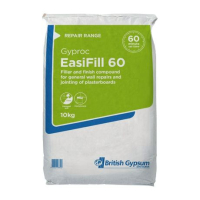
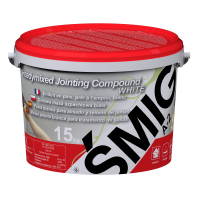
- Setting or ready-mixed. Setting compounds such as Gyproc EasiFill 60 Plasterboard Jointing Compound 10kg are mixed with water and harden within a stated working time, which suits bulk filling and faster recoating. Ready-mixed compounds such as SMIG A-2 Ready-Mixed Joint & Finish Compound 15kg come in a tub with no mixing and dry by evaporation.
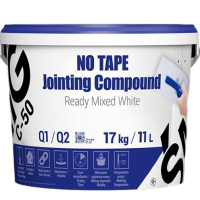
- Tape or no tape. Most jointing systems use plasterboard tape bedded into the first coat. No-tape compounds are designed to reinforce the joint without it.
- Stage of work. Some compounds are made for bedding and filling, others for finishing, and dual-purpose products cover every coat. Check which stages each product is intended for.
- Compatibility between coats. Don't apply a setting compound over an air-drying compound. Where possible, use one system from first coat to last.
How Much Jointing Compound Do You Need?
Coverage depends on the product, the number of coats and how tight the board joints are. Manufacturers usually quote coverage per m² of board, so check the product page or technical data sheet.
- Measure the wall and ceiling area to be boarded in m². A standard 2400 × 1200mm board covers 2.88m².
- Divide the area by the stated coverage per bag or tub.
- Allow extra for repairs, damaged edges and finishing coats, then round up.
MGN Builders Merchants supplies materials for trade and DIY drylining projects. Our branch teams in Romford, Woodford and Orpington can advise on choosing compounds and tape, local stock and collection. Enter your postcode on the website to check delivery availability and minimum spend before ordering.
FAQs
Is joint compound the same as jointing compound?
Yes. Joint compound, often called drywall mud in the US, is known in the UK as jointing compound or plasterboard joint filler. It is used to tape, fill and finish plasterboard joints.
What is the difference between jointing compound and filler?
Jointing compound is formulated for plasterboard joints: it bonds with joint tape and builds up smooth coats with low shrinkage. General-purpose fillers are made for small holes and cracks. Some jointing compounds are also suitable for minor plasterboard repairs, so check the product details.
Do you need tape with jointing compound?
Most jointing systems need tape bedded into the first coat to reinforce the joint and prevent cracking. No-tape compounds are designed to work without it, but always follow the product's application instructions.
How long does jointing compound take to dry?
Setting compounds harden within their stated working time, so the next coat can follow sooner. Ready-mixed compounds dry by evaporation, so drying time depends on coat thickness, temperature and ventilation. Let each coat dry fully before sanding or recoating.
What is the difference between jointing compound and plaster?
Jointing compound finishes only the joints and fixings, leaving the plasterboard face ready to decorate. Finish plaster is applied as a skim coat over the whole wall. Tapered edge boards are designed for taping and jointing, while square edge boards are usually skimmed.