

Filters
Shopping Options
Mixing Paddles
Shop mixing paddles at MGN Builders Merchants for preparing plaster, paint and render. Choose from hex shaft paddles for compatible drills and M14 threaded paddles for paddle mixers. Select the paddle size and head design to suit the material and batch size, and check that the fitting matches your drill or mixer.
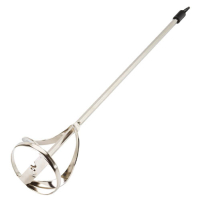
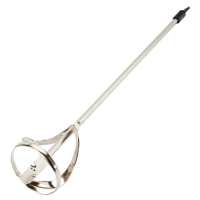
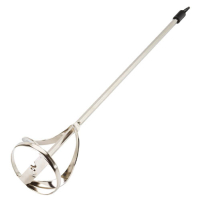
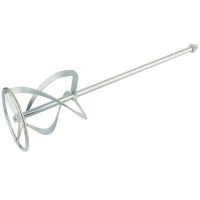
Mixing Paddles for Plaster, Paint and Render
Choose a mixing paddle to suit what is going into the bucket. Thin paint and a thick plaster mix place different demands on the paddle and machine, so start with the material supplier’s preparation instructions.
The 80mm OX mixing paddle has an 80mm head and a 400mm shaft. OX recommends this design for low to medium viscosity materials — in practical terms, free-flowing liquids and mixtures of moderate thickness.
- For paint: follow the coating manufacturer’s guidance on mechanical stirring and mixing speed.
- For plaster and render: match the head design to the specific mixture; suitability varies between products.
- For consistent preparation: follow the stated mixing time and any resting or remixing instructions.
Choosing a Mixing Paddle for Your Drill or Mixer
Check the connection on your machine before selecting a paddle. A hex shaft is held in a compatible drill chuck, while an M14 mixing paddle screws into a matching mixer spindle.
The 100mm hex shaft mixing paddle combines a 100mm head with a 600mm shaft. It is an option for a compatible drill, provided the machine is rated for the paddle size and mixing task.
- Chuck fitting: confirm that the chuck accepts the hex shaft dimensions.
- Threaded fitting: match the paddle’s thread specification to the mixer.
- Operating limits: use the machine manual to check the permitted head diameter and speed.
Matching Paddle Size to Your Bucket and Batch
Head diameter and shaft length affect how comfortably you can work inside the container. A small mixing paddle may suit a narrower bucket, while a wider head needs more clearance and places a greater load on the machine.
The 120mm OX Pro mixing paddle offers a wider head with the same 600mm shaft length as the 100mm version. Both are specified for low to medium viscosity materials, so choose between them by container size and machine capacity rather than assuming the larger paddle will handle a heavier mix.
- Head diameter: leave enough clearance to move the paddle without striking the container.
- Shaft length: allow sufficient reach for the bucket depth and material level.
- Batch size: keep within the paddle and machine manufacturers’ stated limits.
FAQs
How do I mix bagged gypsum plaster with a mixing paddle?
Measure the clean water specified on the plaster packaging into a clean bucket, then gradually add the powder while mixing. Use a suitable paddle at the recommended speed until the lumps have dispersed and the required consistency is reached. Avoid prolonged mixing, as it can affect the plaster’s setting time and workability.
Can I mix plaster by hand?
Yes, where the plaster manufacturer allows it; British Gypsum permits hand mixing for its Thistle finishing plasters. Hand mixing can be practical for small quantities, while a suitable mechanical mixer reduces the effort for larger batches. Follow the same water ratio and consistency requirements whichever method you use.
How do I attach a mixing paddle to a drill?
Disconnect the drill from its power supply or remove the battery before fitting the paddle. Use a drill approved for mixing, insert a compatible hex shaft into the chuck and secure it according to the drill’s instructions. An M14 threaded paddle requires a matching threaded mixer connection.
How should I mix paint before painting?
Stir the paint as directed on the tin until the colour and consistency are even throughout. If mechanical stirring is permitted, use a suitable paint mixing paddle at the recommended speed. Only add water or thinner where the coating manufacturer specifies it.
Can I mix mortar with a paddle mixer?
Some paddle mixers can mix mortar, provided both the machine and paddle are rated for the particular mixture and batch size. Check the mortar supplier’s mixing instructions alongside the equipment specifications. A paddle intended for low to medium viscosity materials should not automatically be treated as suitable for stiff mortar.
Can I use a paddle mixer for concrete?
Only use a mixer and paddle specifically rated for the concrete type, aggregate size and batch quantity. Concrete containing coarse aggregate places different demands on the equipment from paint or plaster. A larger paddle diameter or an M14 connection alone does not confirm suitability.