

Filters
Shopping Options
External wall insulation
External wall insulation boards for EWI and refurbishment projects, designed to reduce heat loss and improve comfort without taking up internal space. Suitable for insulating solid walls externally across UK retrofit work, and for systems finished with render or cladding. Compare board types and thicknesses to suit your wall build-up and finish.
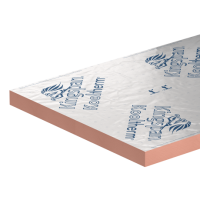
External Wall Insulation (EWI): What It Does and When It’s the Right Choice
External wall insulation (EWI) is a complete outside-wall build-up that starts with insulation boards fixed to the elevation and ends with a protective render or cladding finish. It helps reduce heat loss and cold spots, and can lower condensation risk because the wall stays warmer and the internal surface temperature is less likely to dip.
Insulation for external walls is typically a good fit for solid-wall homes and hard-to-insulate properties where an external upgrade makes more sense than adding internal lining.
External Wall Insulation (EWI) Boards: How to Choose the Best Fit
To choose external wall insulation (EWI) boards, match the board type and thickness to the wall construction, the finish, and the performance requirement.
1) Confirm the wall build-up
Start by identifying whether you’re insulating solid walls or a cavity wall construction, as this affects the build-up and system choice.
2) Select the board material
Pick the insulation type based on what matters most for the project:
-
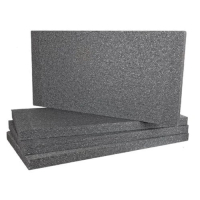
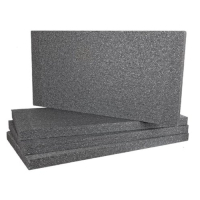
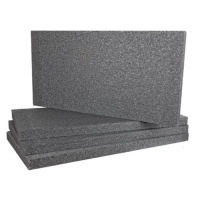
EPS or XPS boards for common external applications
-
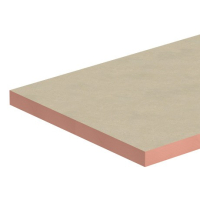
PIR or phenolic boards where a thinner build-up is preferred
-
mineral wool boards for fire performance and breathability
-
wood fibre or cork boards for more vapour-open build-ups
-
aerogel boards for specialist ultra-thin solutions
3) Choose a workable thickness
Common options here are 25mm and 50mm. Thicker insulation can improve thermal performance, but detailing around openings, sills and roof lines often limits what’s practical.
4) Check system and finish compatibility
If the build-up includes render or cladding, ensure the boards are compatible with the chosen EWI system components, including basecoat, mesh and fixings.
External Wall Insulation for Solid Walls vs Cavity Walls
External wall insulation (EWI) is widely used for external solid wall insulation across the UK, because many older properties don’t have a cavity and internal lining can steal space and create disruption. Installed externally, it builds a continuous layer over the wall face, which helps even out internal surface temperatures and reduces the cold “pull” you feel on exposed elevations.
For cavity construction, external cavity wall insulation can still be specified where an external upgrade is preferred over internal lining. In these cases, external wall insulation on cavity walls is typically delivered as part of a full facade package-set out to work with the chosen finish, whether that’s render or cladding. If the upgrade needs to be done from indoors, internal wall insulation is the right place to start.
Solid walls
-
Keeps internal space intact by avoiding internal lining
-
Common UK retrofit route for older, hard-to-insulate walls
Cavity walls
-
Used where an external build-up is preferred to internal works
-
Often combined with a facade upgrade (render or cladding)
Choosing the Right Board Thickness (25mm and 50mm)
Thickness is the quickest way to shortlist external wall insulation boards. In EWI, what you can fit around windows, sills and roof details is often just as important as the performance target.
- Choose 25mm external wall insulation board when you need the slimmest build-up and have limited space around openings and edges. It’s a practical option for modest upgrades where keeping the overall thickness down matters.
- Choose 50mm external wall insulation board when you want a stronger uplift in insulation while keeping detailing manageable. It’s often the better fit when you have enough clearance around openings and roof lines for a thicker build-up.
Quick checks before choosing
-
Clearance around windows, doors, corners and edges
-
Whether the planned finish (render or cladding) suits the thickness
-
Compatibility with EWI system components (mesh, basecoat, fixings)
External Wall Insulation Cost Factors and Cost per m²
The external wall insulation price is rarely just “boards × area” - it’s shaped by the wall layout, the insulation build-up, and the finish you’re taking to site. Quotes are usually expressed as external wall insulation cost per m², but the total can move quickly once access, preparation, and detailing are included.
What affects the cost per m²
-
Wall area and height: more elevation and extra height typically mean more time, labour and access equipment
-
Insulation type and thickness: the board specification changes material cost and can alter trims and detailing
-
Finish choice: external wall insulation and render or cladding affects labour, coats, and the final detailing standard
-
Access and preparation: scaffolding, repairs and substrate prep can add a meaningful uplift
-
Openings and detailing: windows, doors, reveals, sills and edges increase labour and trims
-
System components: basecoat, mesh, fixings and trims are part of most external wall insulation systems
FAQs
Does external wall insulation work?
Yes - when an EWI system is correctly specified and installed, it reduces heat loss through external walls and raises internal surface temperatures, which improves comfort and helps reduce cold spots. Results depend on the existing wall type, insulation thickness, and the quality of detailing around openings and junctions.
What does external wall insulation look like?
Finished EWI typically looks like a newly rendered facade (smooth or textured) or a cladded exterior, with a uniform finish across the elevation. Window reveals and trims often look deeper because the wall build-up is thicker than before.
Is external wall insulation worth it?
It can be worth it where the walls are a major source of heat loss - especially on solid-wall homes - because it upgrades insulation without reducing internal floor space. Value depends on wall condition, access/scaffolding, the chosen finish, and the total installed cost.
How is external wall insulation installed?
Insulation boards are bonded and/or mechanically fixed to the external wall, then covered with a reinforced basecoat and mesh, followed by a protective finish such as render or cladding. Performance and durability rely heavily on correct detailing around windows, doors, roof lines and service penetrations.
How to fix items to external wall insulation?
Loads should be carried back to the structural wall using EWI-compatible fixing systems, so the insulation layer isn’t taking the weight. Heavier items typically need purpose-made fixings or mounting blocks, installed to maintain weather-tightness and avoid crushing the insulation.
How long does external wall insulation last?
A properly installed EWI system can last for decades, but the finish needs periodic inspection and maintenance depending on exposure. Service life varies by system, workmanship, and how well the facade is maintained.