

Filters
Shopping Options
Insulation Rolls
Insulation rolls for lofts, stud walls, roofs and suspended timber floors, designed to friction-fit between joists, rafters and studs to help reduce heat loss and improve comfort on UK new-build and refurbishment jobs. A practical choice where fast coverage and a continuous layer matter, with options that also support sound reduction where specified. Compare thicknesses to suit your joist, rafter or stud depth and the build-up you’re working to.
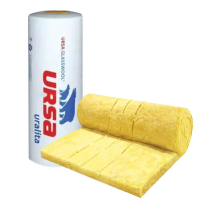
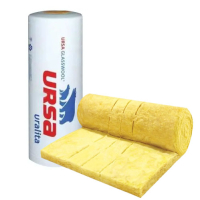
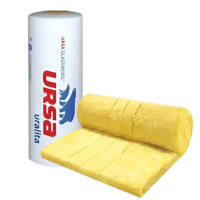
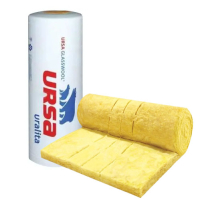
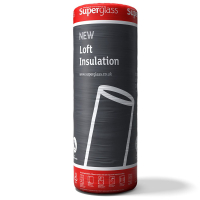
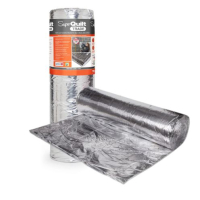
Insulation Rolls: What They Are & When They’re the Right Choice
Insulation rolls are flexible, compressible insulation supplied in long lengths, designed to be cut to size and fitted snugly between joists, rafters, and studwork for reliable thermal and acoustic performance. An insulation roll is practical for UK homes and refurb projects when quick coverage is needed across larger areas without the rigidity of boards.
When They’re the Right Choice
- Fast coverage for larger areas with rolls of insulation
- Snug fit between joists, rafters, and studs with minimal gaps
- Improved thermal comfort plus better sound control through floors or partitions (where specified)
- Topping up existing insulation to boost overall performance
- Straightforward cutting, handling, and installation compared with rigid boards
Where Insulation Rolls Work Best
Insulation rolls perform best in framed cavities where a flexible product can be cut and friction-fitted to reduce gaps and cold spots. This helps maintain consistent performance across the build-up.
Loft spaces (between and over ceiling joists)
- A strong fit for loft insulation roll installs because joist bays are repetitive, easy to measure, and quick to lay in long runs.
- Suitable for top-up layers over existing insulation, provided material isn’t over-compressed, and ventilation paths remain clear.
- For loft-focused options, browse our Loft Insulation range.
Roof builds and roof voids (between rafters)
- Rolls suit rafter bays where a snug fit helps reduce cold bridging along timber lines.
- Follow the roof build-up detail for airtightness and vapour control, particularly on refurb work.
- For roof-specific solutions, explore Roof Insulation.
Stud walls and partitions (between studs)
- A solid choice for studwork because rolls can be cut slightly oversize to sit firmly, helping reduce slumping and gaps.
- Particularly relevant where comfort and noise control between rooms matter—choose products intended for acoustic performance when sound reduction is the priority.
- For wall-type and thickness-led options, see Wall Insulation.
Suspended timber floors (between joists)
- Rolls, often mineral wool, work well between floor joists to reduce draughts and improve comfort underfoot.
- Support netting or a suitable retaining system helps keep insulation tight to the underside of the deck and prevents drop-out over time.
Garages, outbuildings, and mixed refurb areas
- Practical where access is awkward and cuts are frequent. Easy to carry, quick to trim, and more forgiving around services compared with rigid boards.
Why Choose Insulation Rolls
Insulation rolls are a strong option when the job needs cavity-filling insulation that’s quick to install, easy to trim, and dependable in timber framing.
- Efficient coverage – a roll of insulation lays out quickly across lofts, floors, and long stud runs.
- Good cavity fit – cut-to-size installation helps reduce gaps and draught paths between joists, rafters, or studs.
- Simple thickness selection – common options like a 50mm insulation roll, 100mm insulation roll, 150mm insulation roll, or 200mm can be matched to cavity depth and top-up requirements.
- Thermal performance – a thermal insulation roll helps limit heat loss in roof voids, loft spaces, and suspended floors when fitted without excessive compression.
- Noise comfort (where specified) – an acoustic insulation roll can help reduce airborne sound through stud partitions and timber floors.
- Easy handling on site – lighter, flexible format makes it easier to carry, cut, and work around services.
- Value-led choice – often cost-effective for projects where the priority is filling cavities rather than creating a rigid layer.
FAQs
How many rolls of insulation do I need?
Measure the area in m², divide by the roll’s listed coverage, then round up to a whole roll. Allow extra for cuts, perimeter edges, and working around services—waste is higher in irregular bays. If installing in layers (common in lofts), calculate each layer separately.
How much does a roll of insulation cover?
Coverage is listed per product and is based on the roll’s length and width. Thicker rolls usually cover fewer m² because more material is packed into each roll. Use the coverage figure on the product page for take-offs, not a generic estimate.
How many square metres are in a roll of insulation?
There’s no fixed number - m² varies by thickness, width, and roll length. Check the product’s coverage value and use it for ordering. To reduce waste on site, choose a roll width that suits your joist/rafter/stud spacing.
How much is a roll of insulation?
Cost depends on thickness, insulation type, and performance (thermal and acoustic). Higher-performance or thicker rolls cost more per roll but can reduce the number of layers required. Compare options by £/m² as well as per-roll price for a like-for-like decision.
How do I cut an insulation roll?
Mark the cut, then use a long insulation knife (or sharp blade) with a straight edge on a firm surface. Cut slightly oversize for a friction fit between joists, rafters, or studs, then trim neatly around services. Don’t over-compress the insulation during fitting, as performance can drop.