
Phenolic insulation boards are rigid insulation boards for UK drylining and refurb work where you need strong thermal performance in a slim build-up. Compare thickness, facing type, and board choice (phenolic vs PIR vs mineral wool) to match your build-up and fixing method.

Filters
Shopping Options
Phenolic Insulation
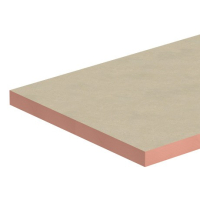
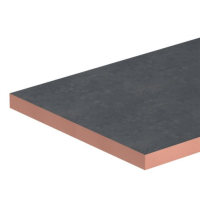
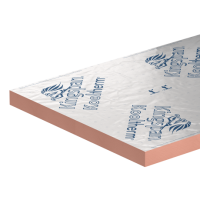
Phenolic Insulation: What It Is & When It’s the Right Choice
Phenolic insulation is a high-performance rigid foam insulation used where you need strong thermal performance in a tight build-up. Phenolic insulation boards are typically chosen when you need to improve wall insulation without pushing linings, reveals, or services too far out. It’s a practical option for refurb work where “thinner but effective” matters.
When It’s the Right Choice
- You’re tight on depth and want a stronger thermal result without adding unnecessary thickness.
- You’re working on refurb/retrofit jobs where moving services, skirtings, or window details add time and cost.
- You want a rigid board format that’s easy to cut, align, and dryline neatly.
- You’re aiming for reliable on-site performance from a continuous layer (tight joints and proper sealing).
- You’re choosing between rigid boards and mineral wool and need thermal efficiency per mm.
Choosing the Right Thickness (Phenolic Insulation)
For UK builders, phenolic insulation thickness is a simple trade-off: target performance vs available build-up. Choose a thickness to suit your drylining or batten system, then build according to the manufacturer's datasheet.
- Start with the system: dot & dab + plasterboard, battened lining with a service void, or direct board-to-wall - this sets the workable thickness.
- Let details cap it: reveals, sockets, pipework and heavy fixings often limit thickness before the main wall does.
- Check the datasheet for the lambda value, facing type, and approved fixing/adhesive method (varies by product).
- Keep it continuous: tight joints, no gaps, and taped seams, as specified, help reduce cold spots and air movement.
Phenolic vs PIR vs Mineral Wool: Key Differences
On site, it usually comes down to build-up depth, site practicality, and how forgiving the material is on uneven backgrounds.
- Phenolic insulation boards: best when you need a slimmer build-up with strong thermal performance.
- PIR boards: a common rigid-board alternative when you’ve got a bit more room, or you’re matching an existing spec.
- Mineral wool: more forgiving in frames/voids and typically better for acoustics, but usually needs more depth to reach the same thermal result as rigid boards.
Phenolic Insulation: Key Benefits & Performance Highlights
A phenolic insulation board is a solid choice when you need performance without over-building the wall.
- Strong thermal performance for its thickness (check the datasheet).
- Helps keep build-ups slimmer around windows, doors and trims.
- Rigid format that’s easy to set out for tidy drylining.
- Best results come from a continuous layer - tight joints and sealed seams.
Available from MGN Builders Merchants.
FAQs
Phenolic insulation vs PIR: what’s the difference?
Both are rigid foam boards, but phenolic insulation is often chosen when you need a strong thermal result in a slimmer build-up because some products have a lower declared lambda value. PIR is the more common “standard” rigid board option and is widely specified where there’s a bit more room in the build-up or you’re matching what’s already on the job. Always compare like-for-like on the datasheet (thickness, lambda, facing, and intended use).
What is the fire rating of phenolic insulation boards?
Phenolic boards carry a Euroclass reaction-to-fire rating to BS EN 13501-1, but the rating can vary by product and facing (for example, foil-faced vs other facings). The overall fire performance also depends on the full lining/build-up, not just the insulation alone. Check the board’s DoP/datasheet for the exact classification of the item you’re buying.
What is the lambda value of phenolic insulation?
Lambda is the board’s declared thermal conductivity (W/mK) - lower usually means better thermal performance per mm. That’s why phenolic boards are often used when thickness is tight and you’re trying to hit a target build-up. Use the declared lambda from the specific product datasheet, as it can vary between ranges and facings.
Do phenolic insulation boards need a vapour control layer?
For internal drylining, you usually need a continuous vapour/air control layer on the warm side to help manage moisture and prevent air leakage into the build-up. Some phenolic board systems rely on the facing and fully sealed joints to provide that control, but only when the manufacturer states it as part of the system. Follow the manufacturer’s guidance for your exact wall type and build-up, and keep joints, edges, and service penetrations airtight.