

Filters
Shopping Options
Eggshell Paint
Eggshell paint provides a smooth, low-to-mid sheen finish that gives surfaces more definition than matt without the stronger reflection of satin or gloss. Suitable options are available for interior walls, ceilings, wood and compatible masonry, including durable water-based formulations for areas that need regular cleaning. Choose the right product for the surface, required durability and colour to achieve an even, practical finish.
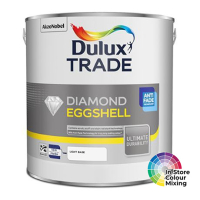 Dulux Trade Diamond Eggshell Emulsion Paint Custom Colour 2.5LFrom £0.00 £55.00 From

What Is Eggshell Paint & What Does an Eggshell Finish Look Like?
Eggshell paint gives a smooth finish with a subtle sheen that sits between a flat matt appearance and the stronger reflection of satin or gloss. It reflects enough light to give the surface a more defined, finished look without creating a highly shiny effect, which makes it a useful choice where you want something more refined than matt.
The exact sheen level can vary between products, and the finish alone does not determine where the paint can be used. Surface suitability, durability and preparation requirements should always be checked alongside the appearance you want to achieve.
Where Can You Use Eggshell Paint? Walls, Ceilings, Wood & Masonry
Our range of Eggshell Paint at MGN Builders Merchants includes options suitable for interior walls, ceilings, wood and compatible masonry surfaces, depending on the individual product. This means interior eggshell paint can work across several parts of a decorating project, but it is still important to choose a coating specifically approved for the surface you are painting.
For plastered walls and ceilings, eggshell paint for walls can provide a more defined finish than a flat matt coating while remaining less reflective than higher-sheen alternatives. An eggshell wall paint can therefore be useful where you want a subtle sheen on suitable interior surfaces without moving to a noticeably glossier finish.
If you are choosing mainly by surface rather than finish, compare our Wall & Ceiling Paint and Wood Paint ranges to make sure the coating suits the job.
Eggshell vs Matt, Satin & Silk: Which Finish Suits the Space?
The main difference between these finishes is the amount of sheen they create, but that also changes how much light is reflected and how visible surface imperfections can appear.
- Matt – The flattest and least reflective finish. It gives a softer appearance and can make minor surface variation less noticeable than higher-sheen coatings.
- Eggshell – Offers more surface definition than matt while remaining noticeably less reflective than satin or silk.
- Satin – Produces a stronger, smoother sheen with more visible reflection. Careful preparation becomes more important because uneven areas can stand out more clearly.
- Silk – A noticeably reflective finish commonly used on suitable interior walls and ceilings. It can help create a brighter-looking surface in well-lit rooms, but it can also highlight imperfections more readily.
The best choice depends on whether you want a flatter finish, a balanced mid-sheen appearance or stronger light reflection. If you are still comparing options, explore our Matt Paint and Satin Paint ranges alongside eggshell.
Water-Based Eggshell Paint: Drying, Clean-Up & Application
A water based eggshell paint is often easier to work with during interior decorating because brushes and rollers can usually be cleaned with water rather than solvent. Water-based systems also commonly offer quicker drying and recoating than traditional solvent-based equivalents, although exact timings vary between products and should always be checked before applying the next coat.
An acrylic eggshell paint uses an acrylic-based formulation while retaining the characteristic low-to-mid sheen associated with an eggshell finish. For the customer, the important point is how the coating performs on the intended surface, how easily it can be maintained and whether it matches the preparation system already in place.
Always follow the product instructions for application method, drying time and any required primer or undercoat rather than assuming all water-based eggshell products behave in exactly the same way.
When Do You Need a More Durable, Washable Eggshell Paint?
A durable eggshell becomes particularly useful where painted surfaces are likely to be touched, marked or cleaned more often. Hallways, shared living areas, communal spaces and other busy interiors can place more demand on a coating than quieter rooms, so the level of washability matters just as much as the sheen.
A product such as dulux trade diamond eggshell emulsion paint is designed for demanding interior surfaces where repeated cleaning and long-term durability are important. When choosing an eggshell emulsion paint, check the individual performance claims rather than assuming every eggshell product offers the same resistance to marks, scuffs or cleaning.
This is especially important when comparing decorative paints that may look similar once dry but are designed for very different levels of wear.
Choosing Eggshell Paint Colours for the Room
Because eggshell has a slight sheen, the finished colour can change noticeably depending on the amount and direction of light in the room. Natural daylight can make a shade appear brighter and cleaner, while artificial lighting can make the same colour look warmer, cooler or deeper depending on the bulb and surrounding finishes.
When comparing eggshell paint colours, consider walls, flooring, doors, skirting, furniture and existing finishes together rather than judging the colour in isolation. A white eggshell paint can create a clean, versatile finish, while deeper or custom colours can be used to create stronger contrast or coordinate with the wider room scheme.
Armstead eggshell white paint 2.5l provides a ready-mixed white option, while our Colour Mixing Lab gives you access to a wider range of compatible custom colours when a standard shade does not suit the project.
Preparing the Surface for a Smooth, Even Eggshell Finish
Eggshell reflects more light than a flat matt coating, so rough filler, uneven sanding, damaged paint or poorly prepared edges can become more noticeable once the final coats have dried. Starting with a sound, clean and dry surface helps the finish look more consistent and reduces the chance of visible defects showing through.
Remove loose or flaking material, repair obvious damage and smooth any rough areas before painting. Bare wood, plaster, masonry and previously painted surfaces may all require different preparation, so the exact product instructions should determine whether a primer, sealer or undercoat is needed.
Where a separate preparation coat is required, compare our Primers & Undercoats range before applying the finishing coats.
FAQs
Can you paint eggshell over gloss?
Yes, eggshell can be applied over a sound gloss finish, but the glossy coating should not simply be painted over without preparation. Sand the existing finish to remove the sheen and create a suitable key, then remove dust and surface contamination before painting. Where adhesion is uncertain or the chosen paint system requires it, use the specified primer or undercoat before applying the eggshell.
Can you use eggshell paint on radiators?
Only use eggshell paint on a radiator if the specific product is approved for heated metal or radiator surfaces. Some eggshell paints are formulated for heated surfaces, but this suitability cannot be assumed from the eggshell finish alone. Check the product specification and choose a dedicated radiator or compatible heated-surface coating where required.
Is eggshell paint good for bathrooms?
Eggshell paint can be suitable for bathrooms when the specific product is approved for high-humidity areas. Dulux Trade identifies Diamond Eggshell as useful in high-moisture spaces, while specialist kitchen and bathroom eggshell formulations are designed specifically for these conditions. Check the individual product specification rather than assuming every eggshell paint provides the same moisture resistance.
Does eggshell paint go yellow?
Some eggshell paints can yellow over time, particularly conventional solvent-based white finishes in areas with little natural daylight. Dulux Trade advises that a water-based coating may be a better option in low-light areas where this type of discolouration is a concern. Because eggshell describes the sheen rather than the paint formulation, check whether the chosen product is water-based or solvent-based when maintaining a bright white finish is important.
What roller should you use for eggshell paint?
The best roller depends on both the eggshell product and the texture of the surface being painted. Dulux confirms that Diamond Eggshell can be roller-applied, while short-pile rollers are generally better suited to very fine or flat surfaces and greater pile helps reach more textured areas. Follow the individual paint instructions and match the roller sleeve to the surface rather than choosing one based on the eggshell finish alone.
Is eggshell paint waterproof?
No, eggshell paint should not automatically be treated as waterproof. Some eggshell formulations are washable or designed for high-humidity rooms, but these properties do not mean the coating is intended for constant or direct water exposure. In damp areas, choose a product specifically approved for the expected moisture conditions and use an appropriate coating system on surfaces that will be regularly wetted.