

Filters
Shopping Options
Concrete Tools
Shop concrete tools at MGN Builders Merchants for spreading, levelling and finishing fresh concrete. Use aluminium concrete rakes to distribute the mix and pointed flooring trowels to smooth surfaces and finish edges and corners.

Choosing Concrete Tools for the Job
The right concrete tools depend on what you need to do and how easily you can reach the working area. Spreading freshly placed concrete is easier with a wide head and a long handle. Smoothing the surface calls for a flat blade and closer control. Our range includes concrete rakes and pointed flooring trowels to help with these different stages of the job.
Concrete Rakes for Spreading and Positioning
A concrete rake helps move wet concrete to where it is needed, spreading out heaps before levelling and finishing begin. Look at the head width and handle length, as well as how well the head is supported when pushing and pulling the mix.
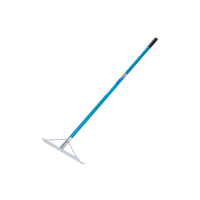
The OX Pro Aluminium Concrete Rake 500mm pairs a wide aluminium head with a 1500mm handle, giving you useful reach across the pour area. Key features include:
- 500mm head: helps distribute freshly placed concrete across the working area.
- 1500mm handle: lets you reach further when pushing and pulling material.
- Braced construction: adds support at the head and handle connection.
- Soft grip: provides a comfortable hold during repeated movements.
Pointed Flooring Trowels for Surface Finishing
A concrete trowel gives you close control when smoothing the surface, especially near edges and corners. When choosing a flooring trowel, consider the size and shape of the blade. A longer blade covers more surface with each pass, while a pointed tip helps you reach into corners and work around obstructions.
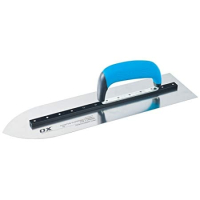
The OX Pro Pointed Flooring Trowel 115mm x 405mm has a flexible stainless steel blade and a soft grip handle. Its pointed shape is useful when a job involves both open floor areas and closer work along boundaries or around details.
Plan for Levelling and the Required Finish
Before choosing your concreting tools, think through the stages of the job. A rake gets the mix into position, while a suitable screed or straightedge is normally needed to establish an accurate level. Floating prepares the surface for further finishing, followed by trowelling where a smooth finish is specified.
The choice of concrete finishing tools also depends on how the finished surface will be used. A smooth trowelled finish may suit an internal floor, while external paving generally needs a texture that provides grip when wet. Wait until bleeding has stopped and surface water has disappeared before final finishing. Follow the project specification for the required finish and curing.
FAQs
What is a concrete rake used for?
A concrete rake moves and spreads freshly placed concrete before levelling. Its wide head helps distribute the mix across the pour area, while the long handle provides reach. Accurate levelling then requires a suitable screed or straightedge.
What type of trowel should I use for concrete?
Use a steel finishing trowel where the project calls for a smooth concrete surface. A pointed flooring trowel helps with access to corners and around obstructions, while blade size affects coverage and handling. For external paving, choose tools that produce the specified slip-resistant texture.
What is the difference between a concrete float and a trowel?
A float evens out minor surface irregularities, embeds aggregate and leaves a slightly textured finish. A steel trowel is used after floating to create a smoother, denser surface where required. The two tools serve different stages of finishing.
When should I trowel concrete?
Trowel after floating, once bleeding has stopped, the surface water has disappeared and the concrete is firm enough for finishing. Timing varies with the mix and site conditions, so avoid relying on a fixed waiting time. Working bleed water into the surface can weaken it and cause defects.
How do I clean concrete off tools?
Remove fresh concrete with water and a suitable brush before it hardens, then dry the tools before storage. For hardened deposits, use a remover specifically approved for the tool’s materials and finish. Check compatibility carefully, as some cement removers can damage aluminium.