

Filters
Shopping Options
Foil Backed Plasterboard
Foil backed plasterboard helps control water vapour within insulated walls, ceilings and roof constructions. It is suitable for applications where condensation risk must be managed, provided the board is installed with carefully sealed joints, edges and service openings. The foil layer does not provide thermal insulation or waterproofing, so the board should be selected as part of a correctly designed building system.
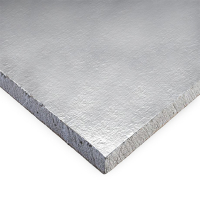
What Is Foil Backed Plasterboard?
Foil backed plasterboard is a gypsum board with a foil layer bonded to the reverse, creating an integrated vapour-control layer within the lining. It is used where water vapour needs to be controlled on the warm side of a wall, ceiling or roof construction. It does not contain thermal insulation and should not be used as a substitute for insulated plasterboard.
Where Should Foil Backed Plasterboard Be Used?
Vapour control plasterboard is most useful where warm indoor air could pass into a colder part of the building fabric and form condensation. It is commonly specified in insulated walls, ceilings and roof constructions where vapour movement needs to be controlled as part of the complete design.
Common applications include:
- External wall linings – Helps restrict water vapour moving from heated rooms into colder wall build-ups.
- Pitched roof linings – Can form the internal lining below insulated rafters where vapour control is specified.
- Loft conversions – Useful where insulation and internal finishes meet within a roof construction.
- Ceilings below cold spaces – Suitable where the ceiling design requires control of vapour movement.
- Timber or metal frames – Can be mechanically fixed as part of a suitable framed drylining system.
- Refurbishment work – Useful where condensation control forms part of an upgraded wall or roof build-up.
Foil backed plasterboard should not be used as a solution for active damp, leaks, rising damp or penetrating moisture. It is also unsuitable for continuously damp or humid areas, so the cause of moisture should be identified before installation.
How Foil Backing Helps Control Water Vapour
Water vapour moves from warmer internal air towards colder parts of a building. If it reaches a cold surface within a wall, ceiling or roof, it can condense and increase the risk of damp insulation, mould growth and deterioration of adjoining materials.
A plasterboard with vapour barrier backing helps restrict this movement by placing a low-permeability foil layer behind the gypsum board. For it to work effectively, joints, edges, service openings and perimeter details should be completed carefully so the vapour-control layer remains as continuous as possible.
Vapour barrier plasterboard controls vapour movement, but it does not waterproof the finished surface. It should be selected as part of a correctly designed construction rather than used to conceal an existing moisture problem.
Foil Backed Plasterboard for Walls, Ceilings and Roofs
The board may be used in several building areas, but the supporting structure and fixing method must suit the application.
- Walls – Fix to suitable timber or metal framing with the foil backing facing into the wall build-up.
- Ceilings – Foil backed plasterboard for ceilings should be mechanically fixed to suitable joists, battens or a specified ceiling frame.
- Roof slopes – Suitable below insulated rafters where the roof design requires a vapour-control lining.
- Openings and services – Keep cut-outs for sockets, pipes and cables neat and seal them where required by the system.
- Board joints – Fit boards closely and complete the joints using compatible tape and jointing materials.
- Ventilation – Use vapour control alongside suitable room and roof ventilation, not as a replacement for it.
At MGN Builders Merchants, the range includes 12.5mm foil backed plasterboard measuring 2400 × 1200mm and covering 2.88m² per sheet. The stocked board has square edges, making it suitable for projects where the full face will be skimmed.
Fixing and Finishing Square Edge Vapour Plasterboard
Square edge vapour plasterboard is generally used where the complete face will be plaster skimmed or finished as part of the specified drylining method. The board should be fixed securely to the supporting structure while avoiding unnecessary damage to the foil backing.
Before installation, check:
- Board direction – Install the board with the foil backing facing into the wall, ceiling or roof build-up, following the specified design.
- Supporting frame – Confirm that the studs, joists or battens provide suitable support.
- Fixing length – Use drywall fixings suited to the board thickness and frame material.
- Joint treatment – Tape and fill the joints or prepare the face for a plaster skim.
- Perimeter sealing – Seal relevant junctions where a continuous vapour-control layer is required.
- Service positions – Plan sockets, pipes and cable openings before fixing to reduce unnecessary breaks in the foil layer.
Use compatible drywall fixings, sealants, jointing compounds, tapes and beads to complete the installation correctly. Boards should be stored flat, kept dry and protected from weather before fitting.
Foil Backed Plasterboard vs Moisture Resistant Plasterboard
These boards are designed to solve different problems. Foil backed plasterboard helps control water vapour passing into a wall, ceiling or roof build-up, while moisture resistant plasterboard is designed for internal rooms where humidity and condensation are more common.
Foil faced plasterboard may be appropriate behind the internal finish of an insulated external wall or roof, but it is not intended for continuously damp areas. Moisture resistant plasterboard is generally more suitable for bathrooms, kitchens and utility rooms, although direct wet zones may still require tanking or a dedicated waterproof lining system.
When comparing foil backed plasterboard price with other specialist boards, choose according to the required function rather than cost alone. Select vapour plasterboard where the construction needs an integrated vapour-control layer, and choose moisture-resistant or waterproof systems where the main concern is exposure on the room-facing surface.
FAQs
Why use foil backed plasterboard?
Foil backed plasterboard can simplify installation by combining an internal lining with built-in vapour control. This can reduce the need to fit a separate membrane behind the board in suitable systems. It is especially useful where space, installation time and continuity of the lining are important.
Is foil backed plasterboard a vapour barrier?
The foil backing acts as a vapour-control layer, but its performance depends on how well the installation is completed. Gaps around sockets, pipes, board edges and junctions can weaken the overall result. These areas should be sealed using materials compatible with the specified system.
How do you fix foil backed plasterboard to a brick wall?
A common method is to install timber battens or a metal lining frame over the brickwork and mechanically fix the boards to it. This avoids relying on standard adhesive bonding to the foil-backed surface. The wall should be dry and sound before any frame or lining is installed.
When should you use foil backed plasterboard?
Use it when the wall or roof design requires vapour control but a separate membrane would make installation more complicated. It can be helpful in refurbishment projects where the internal lining is being replaced alongside insulation upgrades. The final choice should still follow the construction specification or condensation assessment.
Does foil backed plasterboard insulate?
The plasterboard and foil provide only limited thermal resistance compared with dedicated insulation products. Any meaningful insulation improvement must come from mineral wool, PIR, EPS or another suitable insulation layer within the construction. Do not use foil backed board as a replacement for the specified insulation thickness.
Will foil backed plasterboard stop damp?
It may help limit moisture vapour reaching colder parts of a construction, but it will not repair a damp wall. Damp caused by damaged pointing, blocked gutters, leaks or ground moisture requires separate investigation and repair. Installing new boards before solving the cause can trap moisture and hide further deterioration.
How much is foil backed plasterboard?
The board price is only one part of the total project cost. Framing, screws, sealants, jointing products and labour may add more than the difference between standard and foil backed boards. Compare the complete installation cost and the required performance before choosing the cheaper option.