

Filters
Shopping Options
Fire Rated Plasterboard
Fire rated plasterboard is designed for walls, partitions and ceilings where improved fire performance is required as part of a specified system. Available in 12.5mm and 15mm options, it should be selected according to the approved build-up, fixing method and number of board layers. Tapered edges also help create flatter joints and a cleaner finish before decoration.
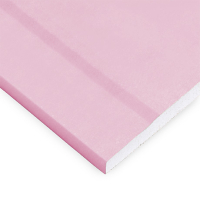 12.5mm Fire Rated Plasterboard Tapered Edge 2400mm x 1200mm (8' x 4')-£2.71From £14.39 £11.99 From £17.10
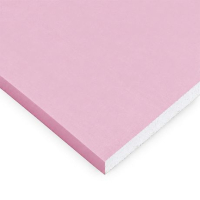 12.5mm Fire Rated Plasterboard Square Edge 1800mm x 900mm (6' x 3')-£4.75From £9.59 £7.99 From £14.34
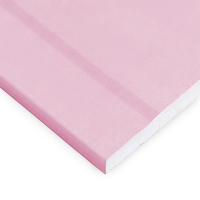 15mm Fire Rated Plasterboard Tapered Edge 2400mm x 1200mm (8' x 4')-£6.61From £16.79 £13.99 From £23.40

What Is Fire Rated Plasterboard?
Fire rated plasterboard is a gypsum-based board with a reinforced core designed to provide improved fire resistance within correctly specified wall and ceiling systems. Also known as fire plasterboard or fireboard, it is commonly identified by its pink face and used where standard plasterboard does not provide the required level of protection. The fire performance of the finished construction depends on the complete build-up, including framing, board layers, fixings and joint treatment.
Choosing the Right Board for Fire-Rated Walls and Ceilings
Choose fire resistant plasterboard according to the approved construction for the project, not simply by board thickness or colour. Builders and DIY professionals should confirm the required application, supporting framework and number of layers before ordering.
Fireboard plasterboard is commonly used for:
- Partition walls – Suitable for specified timber or metal stud systems requiring improved fire protection.
- Separating walls – Used within approved constructions between rooms, dwellings or different occupancy areas.
- Garage linings – Often specified between an attached garage and adjoining residential space.
- Stairways and corridors – Used where the building design requires protected circulation or escape routes.
- Ceiling systems – Suitable where a tested ceiling build-up requires enhanced fire performance.
- Commercial interiors – Commonly installed in offices, shops and shared buildings as part of specified drylining systems.
A single layer of pink plasterboard does not automatically provide a set number of minutes of fire resistance. Always follow the relevant system design, manufacturer guidance and building requirements.
Fire Plasterboard Prices, Coverage and Ordering Tips
Fire plasterboard prices vary according to board thickness, sheet dimensions, brand and order quantity. The lowest price per sheet may not provide the best overall value if the board size creates more joints, waste or handling time.
Before ordering, consider:
- Measured area – Calculate each wall or ceiling separately and deduct only substantial openings.
- Board coverage – A 1800 × 900mm sheet covers 1.62m², while a 2400 × 1200mm sheet covers 2.88m².
- Required layers – Multiply the quantity where the approved system specifies more than one board layer.
- Site access – Smaller sheets are easier to carry through stairs, loft openings and restricted rooms.
- Joint quantity – Larger boards create fewer joints across open walls and ceilings.
- Waste allowance – Include additional material for cuts, openings, damaged edges and layout changes.
MGN’s range includes 6x3 and 8x4 fireboard in 12.5mm and 15mm thicknesses. Store the boards flat, keep them dry and protect the corners and edges before installation.
Choosing Between 12.5mm and 15mm Fire Rated Plasterboard
The difference between 12.5mm and 15mm fire rated plasterboard is mainly the board thickness, weight and contribution it makes within a tested wall or ceiling system. A thicker board contains more gypsum, making it heavier and more rigid, but the completed fire rating still depends on the framing, number of layers, insulation, fixings and joint treatment.
- 12.5mm fire rated plasterboard – Commonly used for internal partitions, wall linings and selected ceiling systems where the approved design specifies a 12.5mm board. It is lighter to handle and may be practical for refurbishment work, smaller rooms and installations requiring multiple board layers.
- 15mm fire rated plasterboard – Provides a thicker and more substantial lining, making it useful for specified separating walls, protected corridors, garage ceilings and other constructions requiring increased board mass or rigidity. It may also be preferred on ceilings where the approved system requires a stronger board with better resistance to movement between supports.
- Single and multiple layers – Some systems use one layer of 15mm board, while others require two layers of 12.5mm board with staggered joints. The correct arrangement must come from the tested construction rather than being decided by thickness alone.
- Handling and installation – A 15mm sheet is heavier and may require two people to position safely, particularly on ceilings. The lighter 12.5mm option can be easier to cut, lift and fix, but may require additional layers in some specifications.
Choose the thickness that matches the approved fire-rated build-up for the project. Do not substitute 12.5mm and 15mm boards without checking the required layers, supporting framework and fixing pattern.
Why Tapered Edge Fireboard Helps with Jointing and Finishing
Tapered edge fireboard has recessed long edges that create space for joint tape and jointing compound. This allows the joints to be filled closer to the face of the board, producing a flatter surface with less build-up than a square-edge board when using a tape-and-joint finish.
- Flatter joints – The recessed edges help the tape and compound sit within the board profile rather than above it.
- Faster finishing – Tapered boards can reduce the amount of sanding and levelling needed before decoration.
- Large surfaces – They are useful on full walls and ceilings where visible raised joints would affect the final appearance.
- Multi-layer systems – The tapered edge is most relevant on the exposed outer layer, which must be finished ready for decoration.
- Joint continuity – Closely fitted boards and fully treated joints help maintain a continuous lining without open gaps.
- Reduced cracking risk – Correct taping, filling and support help limit movement around board joints.
This plasterboard is classified with improved core cohesion at high temperatures. However, the tapered edge itself does not create the fire resistance; performance depends on the complete specified system, including board layers, framing, fixings, insulation and joint treatment.
Fire Rated Plasterboard vs Standard Plasterboard
Standard plasterboard is intended for general internal drylining in areas where enhanced fire resistance is not specified. Fire rated plasterboard contains reinforcement and core additives intended to improve performance within tested fire-rated constructions.
Standard board is normally the more economical choice for ordinary walls, partitions and ceilings in dry rooms. Fireboard should be selected where the project design, Building Regulations or approved system requires additional fire protection.
For installation, allow for the compatible framing, drywall screws, jointing tape and compound required by the specified build-up. Changing the board thickness, number of layers, fixings or joint treatment can affect the performance of the completed system.
FAQs
How thick is fire rated plasterboard?
Fire rated plasterboard is commonly available in 12.5mm and 15mm thicknesses. The correct thickness depends on the specified wall or ceiling system, supporting framework and number of board layers. Thickness alone does not guarantee a particular period of fire resistance.
What fire rating is pink plasterboard?
The pink fire plasterboards is listed as Euroclass A2 for reaction to fire. Euroclass does not state how many minutes a wall or ceiling will resist fire. The fire-resistance period depends on the complete tested construction, including framing, board layers, fixings and joints.
Where can I buy fire rated plasterboard?
Fire rated plasterboard is available at MGN Builders Merchants. MGN Builders Merchants supplies 12.5mm and 15mm fire plasterboard in different sheet sizes. Check the live category page and enter the delivery postcode to confirm current price, stock and availability.
Where should fire rated plasterboard be used?
Fire rated plasterboard is used in specified walls, partitions and ceilings requiring improved fire performance. Common applications include separating constructions, garage linings, protected routes and selected commercial interiors. It must be installed as part of an approved build-up rather than treated as a standalone fire barrier.
Is pink plasterboard fire rated?
Yes, pink plasterboard is commonly used to identify fire-resistant gypsum board on site. The colour is an identification feature and does not confirm the finished wall or ceiling rating by itself. Always check the product classification and the complete system specification before installation.
What is pink plasterboard used for?
Pink plasterboard is used to line internal areas where improved fire resistance is required. It can form part of specified timber or metal stud partitions, wall linings and ceiling systems. The board thickness, layers and fixing arrangement must match the project design.
Can fire rated plasterboard be painted or sealed?
Yes, fire rated plasterboard can be painted once the joints or skim finish are fully dry, smooth and correctly prepared. Apply a suitable primer or mist coat before the finishing paint where required. Paint or a surface sealer does not create the fire rating, and perimeter or penetration sealing must follow the specified system.
Is fire plasterboard cheaper or stronger than standard plasterboard?
Fire plasterboard is normally more expensive than standard plasterboard because it has a reinforced, higher-density core designed for specialist applications. It may feel more substantial, but it is not a structural board and should not be selected simply because it is considered stronger. Choose it where the approved wall or ceiling system requires improved fire performance.