

Filters
Shopping Options
Polymer Skirting Boards
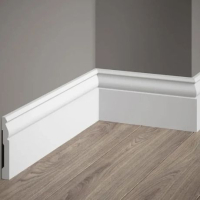 Primed Waterproof Polymer Skirting Board 12mm x 94mm x 2000mmFrom £0.00 £14.80 From
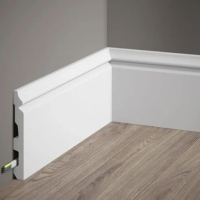 Primed Waterproof Polymer Skirting Board 18mm x 137mm x 2000mmFrom £0.00 £25.60 From
Where to Use Polymer Skirting Boards
Polymer skirting boards cover flooring expansion gaps and create a finished junction between internal walls and floors. Their waterproof, UV-resistant construction makes them suitable for bathrooms, kitchens and other rooms exposed to moisture or strong natural light, while resistance to swelling supports dimensional stability in changing indoor conditions. The available profiles are supplied in 2000mm lengths with a primed surface, so buyers should select the height and depth according to the required wall coverage and adjoining joinery.
Cutting and Joining 2000mm Polymer Skirting Boards
Measure the complete wall run before ordering and allow additional material for corners, joints and cutting waste. Walls longer than 2000mm require more than one board, so joint positions should be planned before the profiles are fixed.
The supplier provides dedicated accessories for preparing mitres and finishing joints. Follow the current installation guidance for the selected profile rather than assuming that every polymer moulding requires the same cutting method.
- Measure wall runs – Record each section separately and deduct door openings from the total.
- Plan the joints – Position board ends before cutting to avoid unnecessary short sections.
- Prepare corners – Use suitable mitre equipment designed for decorative polymer mouldings.
- Check the profile – Keep the moulded detail aligned across adjoining lengths.
- Finish joints – Use a compatible filler where required by the installation instructions.
Dry-check the prepared sections before adhesive is applied. This allows the board lengths, corners and profile alignment to be confirmed before permanent fixing.
Polymer Skirting Boards vs MDF Skirting Boards
Polymer and MDF suit different room conditions and installation priorities. Polymer profiles are waterproof, UV-resistant and resistant to swelling, while MDF skirting boards provide longer lengths and a wider selection of reversible machined profiles.
Polymer is suitable where moisture resistance and colour stability in strong light are important. MDF may be preferred for dry internal rooms where longer wall runs, traditional profile choices and coordination with matching MDF architraves are required.
Customers searching for polymer coated skirting boards should check the core material before purchasing. The products in this category are manufactured from polymer and supplied with a primer-coated surface rather than being MDF boards covered with a polymer layer.
Preparing Primed Polymer Skirting for Painting
The factory-applied primer smooths the surface and prepares it for further decoration. The supplier recommends painting the mouldings after installation using a compatible water-based paint.
Completing the fitting first allows joints and minor installation marks to be decorated with the rest of the skirting. The surface should be free from dust and uncured adhesive before the finishing coat is applied.
Do not assume that solvent-based coatings are suitable. Check the paint manufacturer’s compatibility guidance before applying any coating that is not water based.
Fixing Polymer Skirting Boards with Adhesive
Use a supplier-approved mounting adhesive suitable for decorative polymer profiles and the wall substrate. The wall must be dry, stable and free from grease, dust, peeling paint or crumbling plaster, with at least one bonded surface being porous.
- Prepare the surface – Remove contamination and unstable finishes before applying adhesive.
- Apply evenly – Use strips, dots or waves as directed by the adhesive manufacturer.
- Position the board – Press the profile firmly against the wall for several seconds.
- Allow curing – Leave the fixing undisturbed for the stated 24-hour drying period.
- Remove residue – Clean uncured adhesive with water before it hardens.
Dried adhesive must be removed mechanically, so visible residue should be cleaned before curing. Where the skirting meets Standard Internal Doors, check its depth against the adjoining door trim before permanent fixing.
FAQs
What is a polymer skirting board?
A polymer skirting board is a moulded interior trim manufactured from dense extruded polymer material. It provides a consistent decorative profile and may be supplied with a primer-coated surface for water-based painting. Check the height, depth and finish before ordering because these details vary between profiles.
Do polymer skirting boards swell when exposed to water?
Polymer skirting boards made from PolyForce do not absorb water or swell when exposed to moisture. The material remains dimensionally stable in humid conditions, including kitchens and bathrooms. Any paint and adhesive used with the boards should still be suitable for the expected room conditions.
Can polymer skirting boards conceal cables?
Some polymer skirting boards include a recessed space behind the profile for concealing wires and cables. The available clearance depends on the shape and depth of the selected board. Confirm that the chosen profile includes this feature because it is not stated for every polymer skirting design.
Are polymer skirting boards suitable for rooms with strong sunlight?
Yes, UV-resistant polymer skirting boards are suitable for rooms exposed to strong natural light. Prolonged UV exposure should not cause the polymer material to yellow or discolour where this performance is specified. Where the boards are painted, choose a coating that is also suitable for the level of sunlight in the room.
How should polymer skirting boards be cleaned and maintained?
Remove loose dust with a soft brush or vacuum attachment, then wipe the surface gently with a damp cloth. Waterproof polymer material can be cleaned without absorbing water or deforming. Avoid aggressive rubbing on painted surfaces because the durability of the visible finish also depends on the paint used.