

Filters
Shopping Options
Cement Boards
Cement boards provide durable, Euroclass A1 non-combustible linings for suitable walls, floors, ceilings and external systems. Available in 6mm, 9mm and 12mm thicknesses, they offer different levels of rigidity for applications ranging from tiling substrates to fire-protection constructions. Choose the board according to the complete specified build-up, as fire resistance, moisture protection and finishing requirements depend on the whole installation.
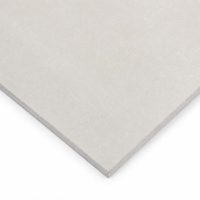

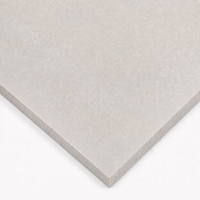
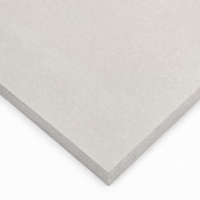
Cement Boards for Walls, Floors and External Use
Cement boards provide strong, stable substrates where ordinary sheet materials may be unsuitable because of fire, moisture or durability requirements. Manufactured from cement reinforced with cellulose fibres, the fire cement boards in this range are asbestos-free, Euroclass A1 non-combustible and available in 6mm, 9mm and 12mm thicknesses. These fire protection boards can be incorporated into suitable internal or external wall and floor systems, including tiled surfaces and installations with underfloor heating.
Where to Use Fibre Cement Boards
Fibre cement boards provide a rigid base for wall and floor finishes in bathrooms, kitchens, utility areas and other moisture-prone locations. Their resistance to mould and moisture damage also makes selected boards suitable for exterior applications, provided the fixings, joints and final covering form a correctly specified weather-resistant system.
For flooring and tiling projects, confirm that the selected cement backer board is compatible with the substrate, loading, fixing arrangement and intended finish. The board creates a dependable surface for tiles, but it should not replace a structural floor deck unless the complete construction permits it.
Choosing 6mm, 9mm or 12mm Cement Boards
Each 2400 × 1200mm sheet covers 2.88m², but increasing the thickness changes the board’s rigidity, weight and suitability for different build-ups.
- 6mm boards: A 6mm cement board provides the thinnest and easiest-to-handle option for approved wall, floor and external systems.
- 9mm boards: These provide a practical intermediate thickness where more rigidity is needed without using the heaviest board.
- 12mm boards: A 12mm cement board provides the greatest rigidity within this range for more demanding specified build-ups.
The 12mm cement boards require more careful lifting and positioning because additional thickness increases sheet weight. Thickness should always match the tested or specified construction rather than being selected solely by assuming a thicker board will provide the required fire performance.
Cement Boards vs Plasterboard and Plywood
Standard plasterboard is lighter and quicker to finish for general internal drylining, while plywood offers useful screw-holding strength for joinery and structural sheet applications. Cement based boards are preferable where non-combustibility, resistance to moisture damage or a stable tiling substrate forms part of the project specification.
A non combustible cement board should not be substituted with standard plywood or plasterboard within a fire-protection construction. Fibre cement is also not thermal insulation: its tested thermal conductivity of 0.359W/mK means separate insulation is still needed where a target U-value must be achieved.
Fire and Moisture Performance of Cement Boards
Euroclass A1 confirms that these cement boards make no contribution to fire and are classed as non-combustible. In the tested internal installation, the 6mm, 9mm and 12mm boards achieved fire-resistance results of 61, 64 and 89 minutes respectively. These figures apply to that tested arrangement and should not be treated as universal standalone ratings, because framing, board layers, fixings, joints and penetrations all affect the complete system.
Selected boards have a water absorption rate of no more than 35%, while testing after 24 hours of immersion showed no water droplets passing through the underside. This supports use in moisture-prone environments but does not make the complete installation waterproof; wet rooms and exposed areas may still require sealed joints, membranes and compatible finishes. The material also showed no damage or separation after 25 freeze-thaw cycles, supporting its suitability within correctly designed external systems.
Cutting, Fixing and Finishing Cement Backer Boards
Measure and support each sheet properly before cutting, using equipment suitable for fibre cement and appropriate controls to limit airborne dust. Fix boards with compatible corrosion-resistant screws; countersunk heads help the fixings finish flush without obstructing tiles, render or other coverings.
Use the fixing centres, edge distances and joint treatment required by the selected system. Fire-rated installations must reproduce the complete tested arrangement, while tiling and external applications require compatible adhesives, sealants and surface preparation.
For suitable fixings, adhesives and jointing products, explore our Dry Lining Accessories range and verify compatibility before installation.
Available from MGN Builders Merchants for construction and fire-protection projects across London and the South East.
FAQs
Are cement boards fireproof?
The cement boards in this range achieve a Euroclass A1 reaction-to-fire classification, meaning they do not contribute to a fire. This allows them to be specified as fire protection boards or fire cement boards in compatible construction systems. The protection time achieved must still be confirmed for the complete wall, ceiling or enclosure design.
Can I use cement board behind a log burner?
Suitable fibre cement boards may be used behind a log burner when the product is approved for that specific installation. Using a non combustible cement board does not reduce the appliance manufacturer’s required distance from combustible materials. The complete surround must use appropriate fixings, sealed joints and materials capable of withstanding the expected temperatures.
How to cut Hardie board cement boards?
Many cement based boards can be cut by repeatedly scoring the surface with a suitable carbide-tipped knife before snapping the sheet. Holes and detailed shapes may require fibre-cement cutting tools, with the board fully supported to prevent broken edges. Minimise airborne dust by using extraction, suitable respiratory protection and the cutting method specified for the particular board.
What cement board is used for a fire surround?
There is no single board thickness suitable for every fire surround or stove installation. Use a 12mm cement board only when that product is accepted within the specified surround system; 12mm cement boards offer increased rigidity but not automatic approval. A 6mm cement board should only be chosen where the appliance and construction requirements specifically permit it.
Can you plaster over cement board?
A cement backer board can accept plaster when both the board and chosen finishing system are compatible. The surface may need cleaning and priming, while joints normally require suitable reinforcement before the base coat is applied. Confirm the preparation requirements before using standard finishing plaster, as direct application may result in poor adhesion or cracking.
Is cement board waterproof?
Cement boards tolerate moisture better than many timber-based sheets, but they should not be treated as a complete waterproof barrier. Water can still travel through untreated joints, screw positions, edges and surrounding materials. Showers, wet rooms and exposed installations therefore need a separate waterproofing system suited to the application.