

Filters
Shopping Options
Ball Bearing Hinges
Ball bearing hinges provide smooth, reliable movement for standard and heavier internal doors. Available in different performance ratings, materials and finishes, they should be selected according to the finished door weight, frequency of use and installation requirements. Higher-duty options are suitable for demanding openings where greater load support and long-term durability are required.
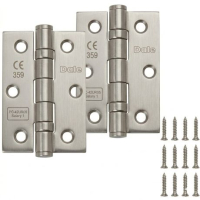 Union 76 x 51mm Ball Bearing Butt Hinge Satin Stainless Steel CE7 Pack of 2-£1.70From £4.48 £3.73 From £6.18
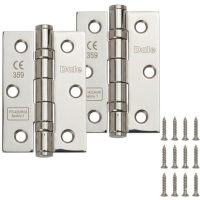 Union 76 x 51mm Ball Bearing Butt Hinge Polished Stainless Steel CE7 Pack of 2-£0.92From £5.26 £4.38 From £6.18
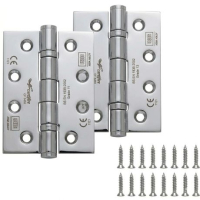 Union 102 x 76mm Ball Bearing Butt Hinge Polished Chrome CE11 Pack of 2-£2.35From £3.70 £3.08 From £6.05
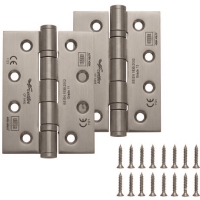 Union 102 x 76mm Ball Bearing Butt Hinge Satin Nickel CE11 Pack of 2-£2.18From £3.70 £3.08 From £5.88
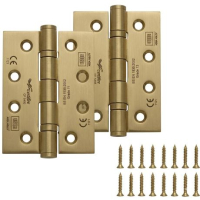 Union 102 x 76mm Ball Bearing Butt Hinge Electro Brass CE11 Pack of 2-£2.18From £3.70 £3.08 From £5.88
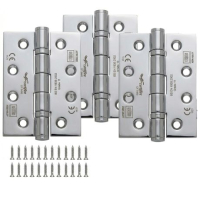 Union 102 x 76mm Ball Bearing Butt Hinge Polished Stainless Steel CE13 Pack of 3-£5.10From £10.51 £8.76 From £15.61
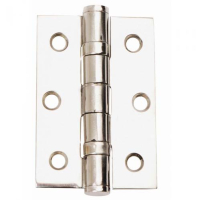 Union 76 x 51mm Ball Bearing Butt Hinge Polished Stainless Steel Pack of 2-£4.62From £3.04 £2.53 From £7.66
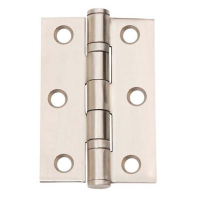 Union 76 x 51mm Ball Bearing Butt Hinge Satin Stainless Steel Pack of 2-£4.19From £3.04 £2.53 From £7.22


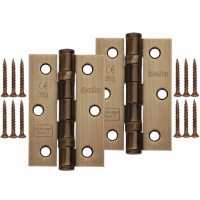
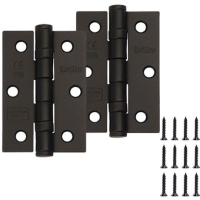
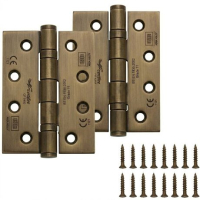
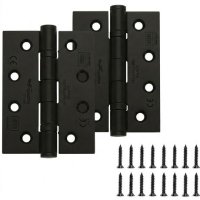
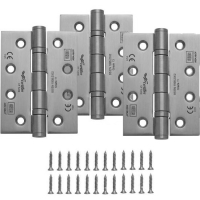
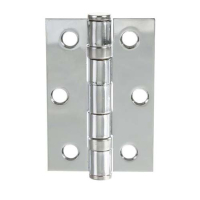
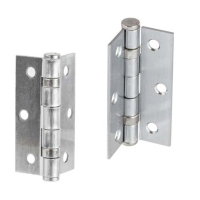
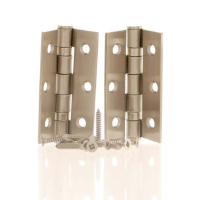
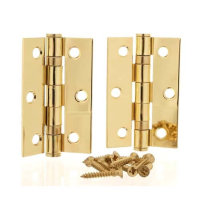
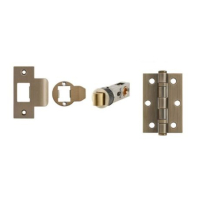
Ball Bearing Hinges for Standard and Heavier Internal Doors
Ball bearing hinges use bearings between the knuckles to reduce friction, helping doors operate smoothly under repeated use. They are suitable for standard internal timber doors as well as heavier doors where the individual hinge specification supports the load. Selection should be based on the completed door weight, usage level, fitting arrangement and any fire-door requirements, not appearance alone.
Choosing Between CE7, CE11 and CE13 Ball Bearing Hinges
CE7, CE11 and CE13 identify different tested hinge classifications, but they are not simple quality scores. Current product information shows standard 76 × 51mm options for internal timber doors, selected 102 × 76mm higher-duty options rated up to 80kg, and a 102 × 76mm model rated up to 120kg. These limits apply only to the specified hinge, required quantity and installation conditions, so check the individual specification before ordering.
Some hinges are also stated as suitable for FD30 and FD60 timber fire doors when installed correctly, with intumescent protection required where specified. Fire suitability must therefore be confirmed for the chosen product and complete doorset rather than assumed from the hinge dimensions or classification.
Matching Hinge Ratings to Door Weight and Daily Use
When selecting ball bearing door hinges, calculate the finished door weight rather than using the weight of the bare leaf. Include glazing, locks, handles and other attached ironmongery, then consider how frequently the door will operate and whether a closer is fitted.
Key checks include:
- Finished weight – Keep the complete door within the stated capacity.
- Daily operation – Frequently used doors place greater demands on the bearings and fixings.
- Hinge quantity – Follow the specified fitting arrangement, not simply the number supplied in a pack.
- Door closers – Confirm compatibility where additional operating forces are introduced.
- Fire performance – Check the stated approval and required intumescent protection.
- Fixing points – Ensure the door and frame provide sound material for secure installation.
For a new installation, match the selected hinges to the construction and weight of the chosen internal doors.
When to Use Heavy Duty Ball Bearing Hinges
Heavy duty ball bearing hinges are appropriate for larger or heavier door leaves, frequently operated openings and installations involving door closers or substantial additional hardware. Higher-duty models should be selected from their verified weight capacity and approved application rather than their physical size alone.
The term heavy duty butt hinges does not guarantee that two similarly sized products provide equal performance. Material thickness, bearing construction, hinge quantity and tested classification can all affect suitability, making the individual specification essential for load-critical or fire-rated work.
Choosing the Right Hinge Material and Finish
Finish should coordinate with handles, locks and other visible ironmongery, but performance must remain the first consideration. Black ball bearing hinges provide a coordinated option for doors fitted with matching dark hardware, while stainless steel ball bearing hinges offer a durable, corrosion-resistant material choice. Neither finish alone confirms load capacity or fire-door suitability, so check the complete specification before fitting.
Ball Bearing Hinges vs Butt Hinges: Which Should You Use?
Ball bearing butt hinges contain bearings between the knuckles, reducing friction and supporting smoother operation under repeated use. Standard Butt Hinges use a simpler pivoting construction and can be suitable for lighter doors with lower operating demands. The correct choice depends on the finished door weight, expected use, required performance and installation specification.
Consider the following before choosing:
- Door weight – Heavier doors may require a tested ball-bearing option with sufficient capacity.
- Usage level – Frequently operated doors place greater demands on hinge knuckles and fixings.
- Door closers – Additional operating forces may require a higher-rated hinge specification.
- Fire requirements – Confirm suitability for the complete tested doorset and required protection.
- Hinge quantity – Follow the specified fitting arrangement rather than relying on pack quantity.
- Installation quality – Accurate recesses, alignment and secure fixings remain essential for either type.
Choose ball-bearing models where smoother movement, frequent operation or greater load support is required. Standard butt hinges remain practical for suitable lighter doors where the simpler mechanism meets the installation requirements. Always compare the individual specifications rather than selecting by size, finish or price alone.
FAQs
Are cement boards fireproof?
The cement boards in this range achieve a Euroclass A1 reaction-to-fire classification, meaning they do not contribute to a fire. This allows them to be specified as fire protection boards or fire cement boards in compatible construction systems. The protection time achieved must still be confirmed for the complete wall, ceiling or enclosure design.
Can I use cement board behind a log burner?
Suitable fibre cement boards may be used behind a log burner when the product is approved for that specific installation. Using a non combustible cement board does not reduce the appliance manufacturer’s required distance from combustible materials. The complete surround must use appropriate fixings, sealed joints and materials capable of withstanding the expected temperatures.
How to cut Hardie board cement boards?
Many cement based boards can be cut by repeatedly scoring the surface with a suitable carbide-tipped knife before snapping the sheet. Holes and detailed shapes may require fibre-cement cutting tools, with the board fully supported to prevent broken edges. Minimise airborne dust by using extraction, suitable respiratory protection and the cutting method specified for the particular board.
What cement board is used for a fire surround?
There is no single board thickness suitable for every fire surround or stove installation. Use a 12mm cement board only when that product is accepted within the specified surround system; 12mm cement boards offer increased rigidity but not automatic approval. A 6mm cement board should only be chosen where the appliance and construction requirements specifically permit it.
Can you plaster over cement board?
A cement backer board can accept plaster when both the board and chosen finishing system are compatible. The surface may need cleaning and priming, while joints normally require suitable reinforcement before the base coat is applied. Confirm the preparation requirements before using standard finishing plaster, as direct application may result in poor adhesion or cracking.
Is cement board waterproof?
Cement boards tolerate moisture better than many timber-based sheets, but they should not be treated as a complete waterproof barrier. Water can still travel through untreated joints, screw positions, edges and surrounding materials. Showers, wet rooms and exposed installations therefore need a separate waterproofing system suited to the application.